Altare della Patria Visitor Guide: What to See
Plan your Vittoriano visit with a practical route covering the free memorial, Unknown Soldier, Risorgimento Museum and panoramic terrace.
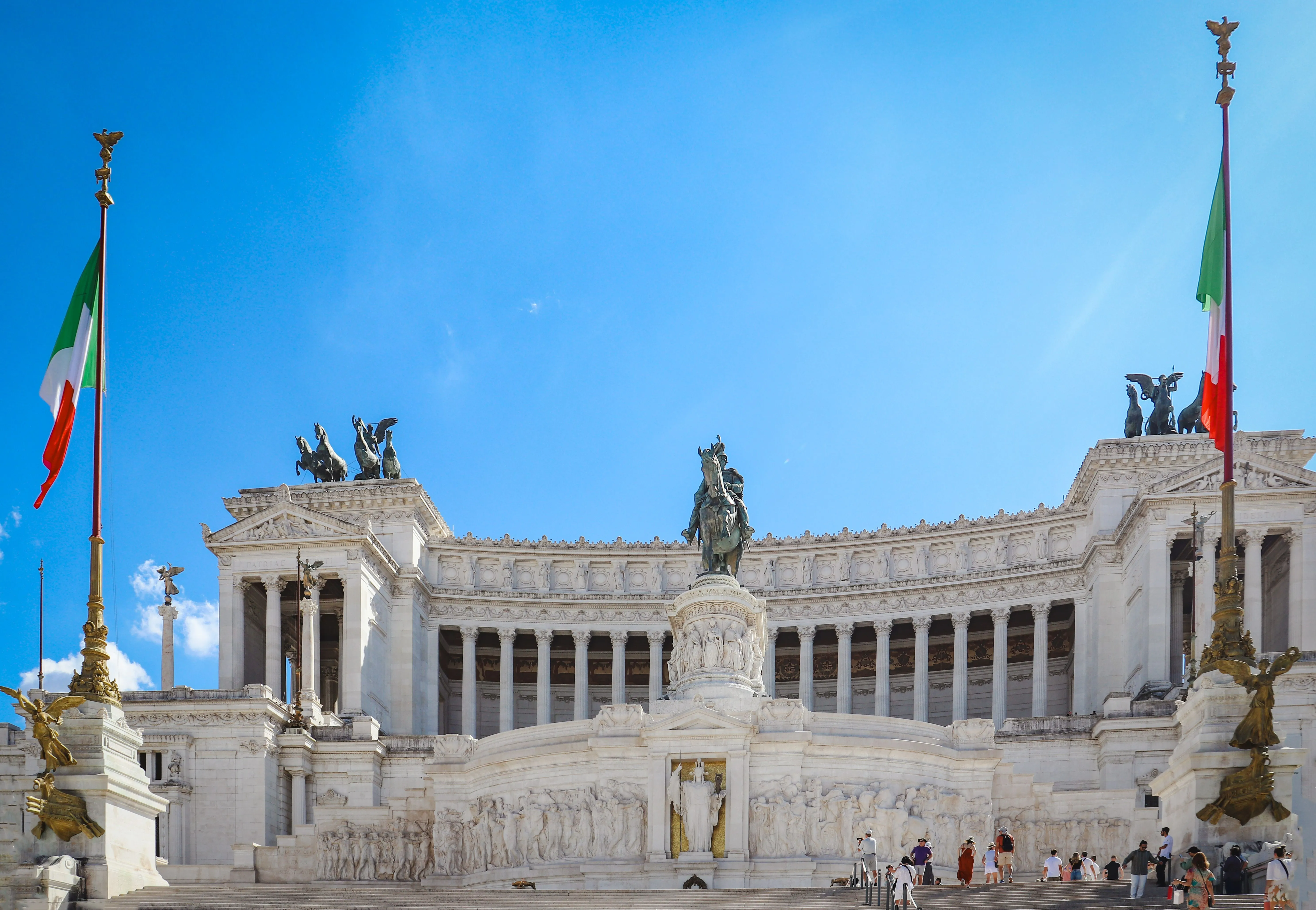
The white monument rising above Piazza Venezia is known by several names. Its official identity is the Monument to Victor Emmanuel II, commonly shortened to the Vittoriano; many visitors call the whole complex the Altare della Patria, although that name properly belongs to the central altar. Knowing the distinction makes the building easier to read: it is simultaneously a royal monument, a national memorial, a museum complex and one of central Rome's best viewpoints.
What can be visited
The broad exterior stairways, terraces and central memorial form the open-air heart of the visit. Here you can see the equestrian statue of Victor Emmanuel II, the sculptural Altar of the Fatherland and the Tomb of the Unknown Soldier, watched by an honour guard and an eternal flame. These spaces are free under the current VIVE admission system.
The ticketed circuit adds the Panoramic Terrace, the Sommoportico or upper colonnade, the Central Museum of the Risorgimento and Palazzo Venezia across the square. One ticket currently covers these areas and remains valid for seven days, which is useful if you do not want to rush both buildings on the same afternoon.
A sensible first-time route
Enter from Piazza Venezia and pause at the bottom rather than climbing immediately. The symmetrical composition is clearest from here: fountains anchor the corners, stairways converge on the altar, and the long colonnade closes the skyline. Climb toward the Tomb of the Unknown Soldier, keeping the ceremonial nature of the space in mind.
Continue to the terrace around the equestrian statue, then follow signs toward the museum and upper levels. The Risorgimento Museum explains the political movement that produced unified Italy and therefore supplies the context the exterior sculpture assumes. Finish with the panoramic lifts if visibility is good. The summit stands about 70 metres above the city and offers a 360-degree view of the Forum, Colosseum, Capitoline Hill, historic centre and St Peter's dome.
How long to allow
- Exterior memorial only: about 30–45 minutes
- Memorial and panoramic terrace: about 60–90 minutes
- Full Vittoriano circuit with museum: roughly two hours
- Vittoriano plus Palazzo Venezia: allow half a day or use the ticket on a second day
These are comfortable estimates rather than timed itineraries. Security, lift capacity, ceremonies and personal interest can all change the pace.
Current hours and admission
At publication, official VIVE information lists the Vittoriano daily from 9:30 to 19:30, with last admission to the monument at 18:45. The Panoramic Terrace, Central Museum of the Risorgimento and Sommoportico have last admission at 19:00; the ticket office closes at 18:45. The combined full ticket is listed at €18, with a €5 reduced rate for eligible EU citizens aged 18–25 and free categories including visitors under 18 and people with disabilities. Free admission applies on the first Sunday of the month under special same-day ticket rules.
Hours, prices, routes and temporary closures can change. Check the official VIVE website shortly before travelling, especially on dates associated with state ceremonies.
Practical details that improve the visit
The stone terraces are exposed. In summer, arrive near opening time, carry water and use sun protection; in winter or windy weather, bring an extra layer for the roof. Wear shoes with grip, because polished steps can be uncomfortable and rain changes the surface. Personal non-commercial photography is generally permitted unless a sign says otherwise.
The monument is a place of remembrance, not simply a scenic staircase. Avoid sitting on memorial elements, follow barriers and keep noise low around the guards. Food and drink should be consumed only in designated areas; VIVE operates a cafeteria-restaurant on the panoramic level.
Wheelchair and stroller access uses the Aracoeli-side entrance, where a platform lift and an internal lift reach Terrazza Italia; two panoramic lifts continue to the summit. Ask staff for the current route, as the monumental front steps are not the accessible approach.
Understand the levels before you climb
The Vittoriano is easier to navigate when treated as a sequence rather than one building entrance. The lower approach introduces the two sea fountains and the central memorial. The next terraces bring the four great sculptural groups and the equestrian statue into clearer view. Higher circulation leads toward the museum, Sommoportico and the departure point for the panoramic lifts. Signs and one-way routes determine the exact order on the day; returning by the same staircase may not be possible.
Do not mistake Terrazza Italia for the final summit. It is an important intermediate level with the ticket office and access toward the upper attractions. The Panoramic Terrace is the separate, higher viewpoint reached by the glass lifts. This distinction explains why visitors can already see a broad view before presenting a rooftop ticket.
Security rules deserve a final check before setting out. VIVE's current guidance does not admit bags larger than 40 × 35 × 15 centimetres. Personal photography is generally possible, but flash, tripods, monopods and selfie sticks are not allowed. Toilets, baby-changing facilities and a cafeteria-restaurant are available within the wider visitor route. Policies can change, so use the official Visit page rather than an old packing list.
Is it worth entering the paid areas?
The free terraces provide a rewarding close view of the architecture. The paid circuit makes most sense for visitors interested in the rooftop panorama, modern Italian history or both. For a first trip to Rome, the museum and roof also perform a useful orientation function: one explains how the Italian state emerged, while the other shows how ancient, papal and modern Rome occupy the same compact centre.
عن الكاتب

Rome Visitor Guide
أُعد هذا الدليل المستقل بالاستناد إلى معلومات VIVE ووزارة الثقافة الإيطالية والمتاحف لمساعدة الزوار على التمييز بين الدخول المجاني والتجارب المدفوعة.
Tags
Comments (0)
Loading comments...