Central Museum of the Risorgimento Visitor Guide
Explore the Vittoriano's Risorgimento Museum through letters, paintings, weapons, personal relics and flags tracing Italy's unification.
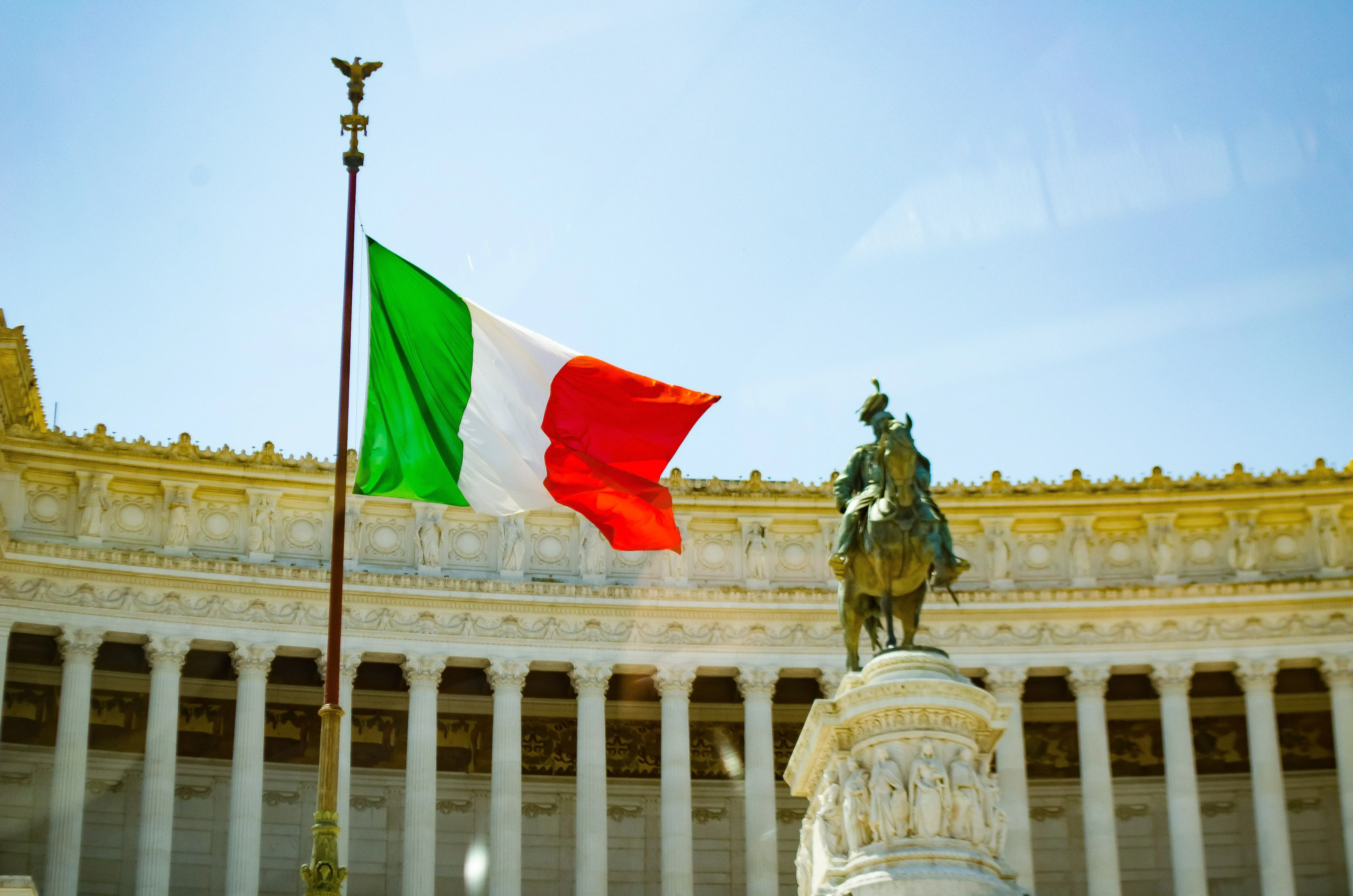
The Vittoriano's exterior turns Italian unification into marble certainty. The Central Museum of the Risorgimento tells a less tidy story. Its letters, diaries, paintings, sculptures, weapons, uniforms, flags and personal objects return politics to the people who argued, fought and lived through it.
What the museum covers
Official VIVE interpretation describes a route beginning in the eighteenth century and continuing through the principal stages of liberation and unification to the First World War. This long span matters. The Risorgimento was not a single campaign or the achievement of one hero; it grew from intellectual movements, revolutions, diplomacy, wars and competing projects for Italy's future.
Visitors encounter major figures such as Giuseppe Mazzini and Giuseppe Garibaldi, but the collection also points toward opponents, lesser-known participants and the material culture of politics. A handwritten page or damaged flag can communicate uncertainty more directly than the finished allegories outside.
A museum conceived early and opened late
The idea of a central Risorgimento museum dates to 1884, when memories and documents from unification were still close to living participants. Yet the museum only opened in the Vittoriano in 1970. That long gap reflects the challenge of building collections, completing spaces and deciding how national history should be presented through monarchy, Fascism and republic.
Its location is unusually charged. The visitor does not leave the monument's symbolic world; the galleries sit inside it. Museum evidence therefore acts as a commentary on the architecture surrounding it.
Why flags deserve slow attention
Historic flags are both designed objects and physical witnesses. Colour, inscriptions and emblems identify a unit, political cause or civic group, while tears, repairs and fading record use. The Italian tricolour itself changed meaning as it moved from revolutionary and patriotic contexts into the emblem of a state.
Do not treat every flag as interchangeable national decoration. Read labels for origin, date and association. A volunteer banner may express a different political culture from an official military standard. Light levels can be low because textiles are sensitive, and displays may rotate for conservation.
Letters, diaries and personal relics
Documents reveal disagreement and contingency. Mazzini's republican vision, royal policy, Garibaldian action and diplomatic statecraft did not begin as one coordinated plan. Personal writing can expose motives and fears that later patriotic narratives smooth away.
Relics require equally careful reading. Museums historically collected objects linked to celebrated figures, sometimes valuing association as much as artistic quality. Their significance lies in the relationship between object, owner and later act of preservation.
Paintings, sculpture and weapons
Visual art helped establish the familiar images of battles, proclamations and heroes. Ask whether a work records an event directly or reconstructs it later. Composition, costume and gesture can shape public memory even when the underlying subject is historical.
Weapons and uniforms are material evidence of conflict, but they should not reduce the Risorgimento to military history. Political organization, print culture, popular participation and international diplomacy were equally important. The strongest visit moves between object types rather than spending all its time in one heroic register.
The First World War endpoint
Extending the route to the First World War reflects an older interpretation of the conflict as completing national unification through the acquisition of territories. Modern visitors should recognize that this framing was contested and came at immense human cost. The Unknown Soldier outside gives that cost a direct commemorative presence.
The museum and tomb work together: one supplies named actors and chronological evidence, while the other represents the unidentified dead.
Follow arguments, not only chronology
The galleries make most sense when visitors track competing answers to the question of unification. Mazzini advocated a republican national project rooted in political education and insurrection. Garibaldi became associated with volunteer action and military charisma. Cavour worked through the institutions and diplomacy of the Savoy monarchy. Victor Emmanuel II supplied dynastic and state continuity.
These figures sometimes cooperated, but their goals and methods were not identical. Labels, letters and portraits can be read for disagreement rather than assembled into an inevitable march toward 1861. The museum's value lies in preserving traces of uncertainty that the monument's unified façade suppresses.
How to read a historical flag
Begin with the label: date, maker or owner, place of use and later provenance determine meaning. Then examine construction. Painted or embroidered emblems, inscriptions, fringe, repairs and attachment points distinguish a political banner from a military standard or civic flag. Fading and damage may record exposure, but they can also result from later storage.
Textiles are light-sensitive and fragile, so displays may be dim or rotate. An absent flag is not necessarily permanently removed. Current object lists and gallery arrangements should be checked with VIVE rather than inferred from an old visitor photograph.
Personal objects and the making of relics
An ordinary possession becomes a museum relic because it is linked to a person or event. That association can bring viewers close to historical experience, but it also reflects choices made by families, collectors and institutions. Ask who preserved the object, when it entered the collection and what story its display now supports.
The same caution applies to weapons. A weapon can document technology, service and conflict without being treated as a heroic trophy. Pair it with diaries, casualty evidence or political correspondence to keep the human consequences of military action visible.
Museum, Shrine of the Flags and Palazzo Venezia
The Central Museum of the Risorgimento is not interchangeable with the Shrine of the Flags. The shrine has separate access information connected with the Ministry of Defence. Palazzo Venezia is another distinct museum, even though the current VIVE ticket covers it with the paid Vittoriano circuit.
This institutional map matters when planning. A combined ticket does not collapse three different historical purposes into one gallery. The Risorgimento Museum explains unification, the memorial spaces serve remembrance, and Palazzo Venezia presents its own architecture and collections.
A 90-minute object strategy
Use the first fifteen minutes to establish chronology. Spend the next hour selecting one document, one textile, one personal object, one artwork and one military object for close reading. Reserve the final fifteen minutes for the First World War and the transition back to the Unknown Soldier outside. This method creates a memorable argument without pretending to exhaust the collection.
Practical planning
At publication, the museum is open daily from 9:30 to 19:30 with last entry at 19:00 and is included in the VIVE combined ticket with the Panoramic Terrace, Sommoportico and Palazzo Venezia. The full ticket is currently valid for seven days. Hours, galleries, objects on view and prices can change, so check VIVE before arrival.
Allow at least one hour, more if you read labels closely. Photography for personal, non-commercial use is generally permitted unless a sign forbids it. Do not use flash or touch cases and textiles.
A productive way to visit
Before entering, look at the equestrian king and regional allegories. Inside, identify evidence that complicates their unified message. Afterward, return to the Tomb of the Unknown Soldier. This three-part sequence—official symbol, historical collection, memorial—shows why the Vittoriano is more than either a museum or a monument alone.
Σχετικά με τον συγγραφέα

Rome Visitor Guide
Αυτός ο ανεξάρτητος οδηγός βασίζεται σε πληροφορίες του VIVE, του ιταλικού Υπουργείου Πολιτισμού και των μουσείων, ώστε οι επισκέπτες να διακρίνουν καθαρά τη δωρεάν πρόσβαση από τις επί πληρωμή εμπειρίες.
Tags
Comments (0)
Loading comments...