How the Vittoriano Became Italy's National Monument
Architecture, unification, remembrance and debate on the Capitoline Hill.
Table of Contents
A Monument for Victor Emmanuel II
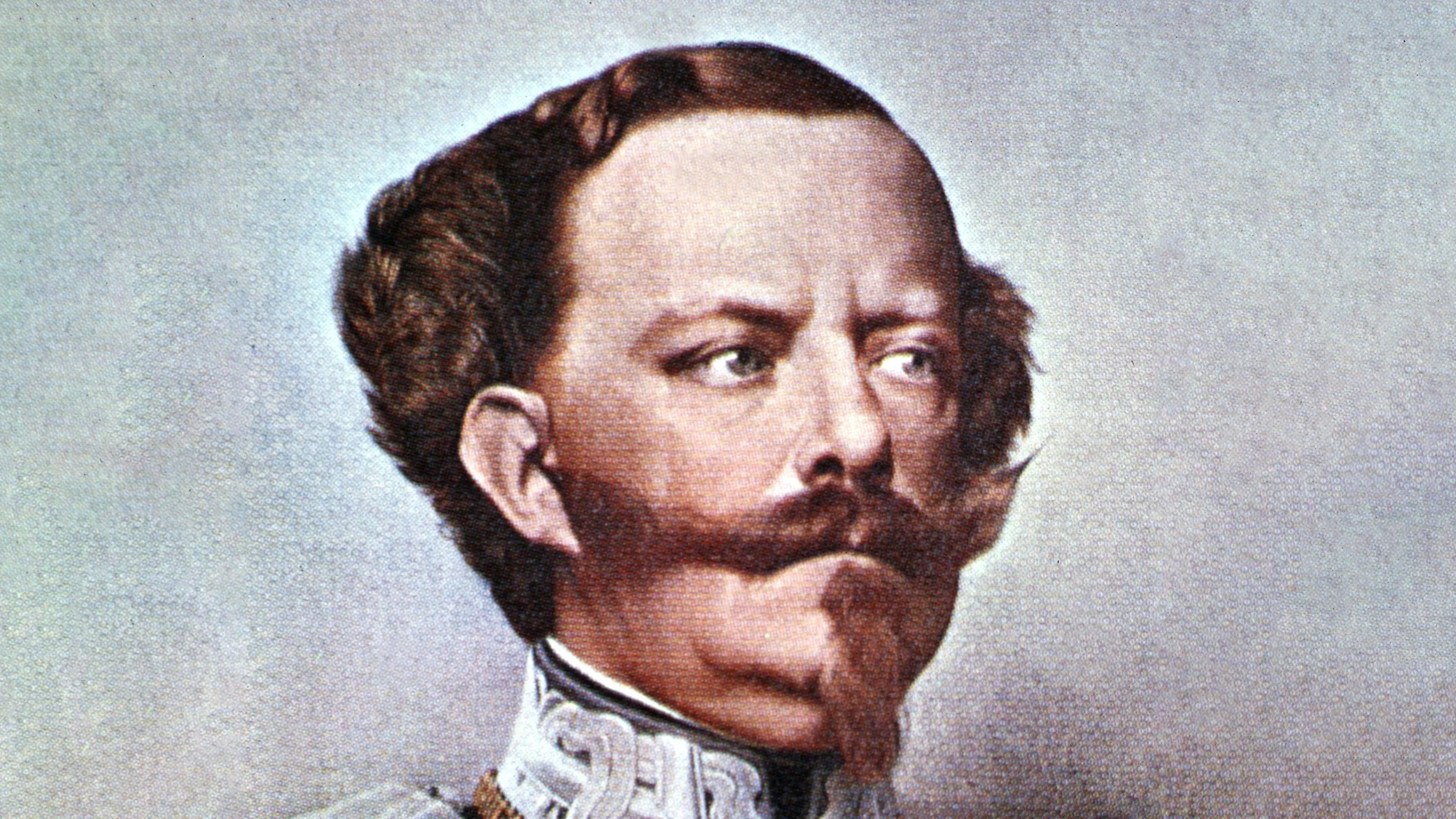
Victor Emmanuel II died on 9 January 1878, less than eight years after Rome became the capital of the Kingdom of Italy. Parliament quickly approved a national monument to the first king of unified Italy. The project was intended to commemorate the monarch, but it also had to give architectural form to a state whose regions had only recently been brought together.
Its position beside the Capitoline Hill was highly symbolic. Ancient Rome, the civic traditions of the Campidoglio and the new capital could all be read from one site. This ambition explains why the complex soon became more than a royal memorial: sculpture, inscriptions and ceremonial spaces turned it into a statement about the nation's origins and ideals.
Competitions and Sacconi's Design
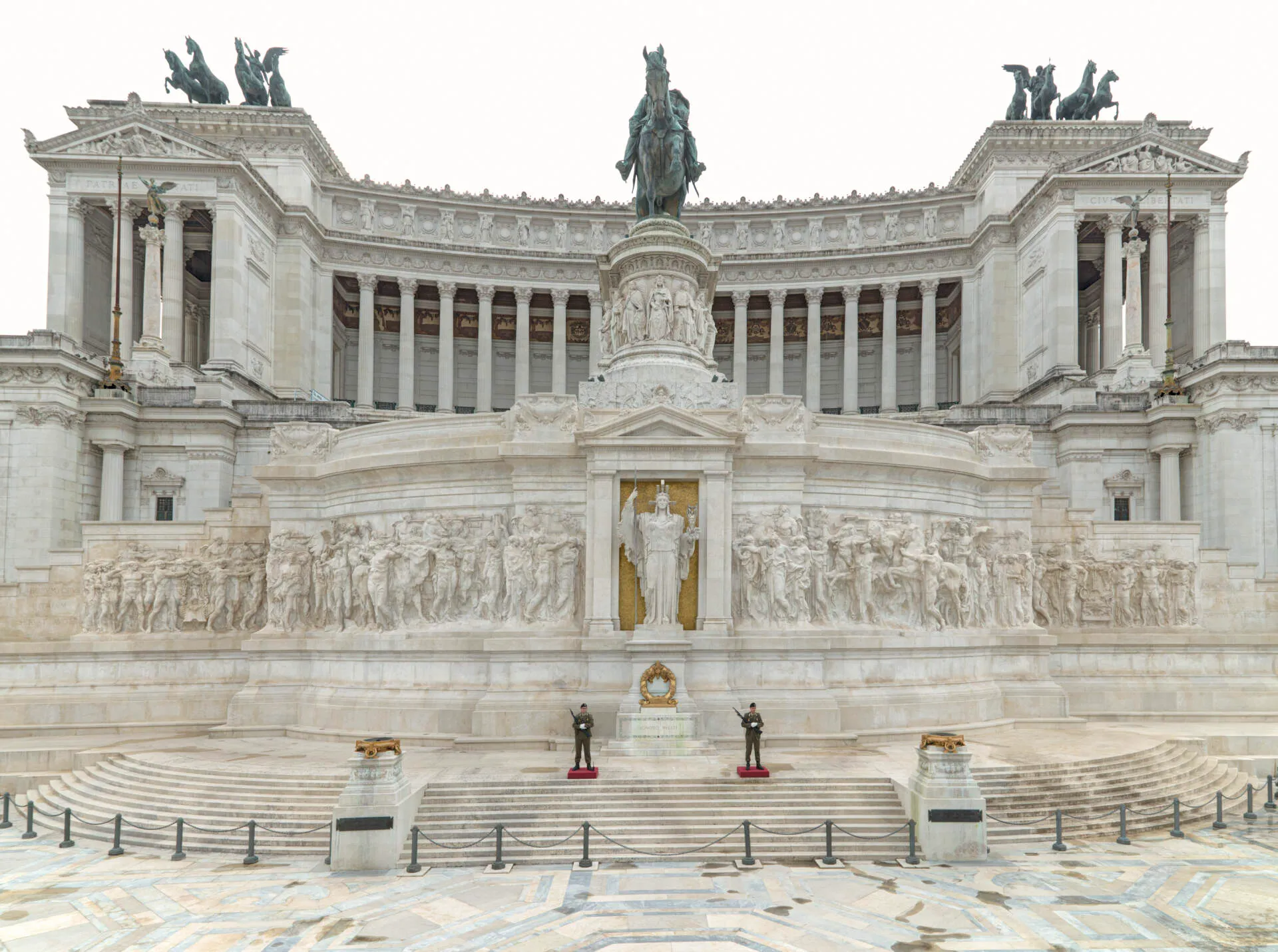
An initial international competition failed to produce a workable result. A second competition restricted to Italian architects selected Giuseppe Sacconi's proposal in 1882. His design placed a broad stairway, central altar, equestrian statue and curved portico on a strong axial line facing the city.
Sacconi drew on classical sanctuaries rather than copying a single ancient building. The monument's symmetrical terraces and long Corinthian colonnade created a modern civic stage. After Sacconi died in 1905, architects including Gaetano Koch, Manfredo Manfredi and Pio Piacentini continued the project while retaining its main conception.
Building on the Capitoline Hill
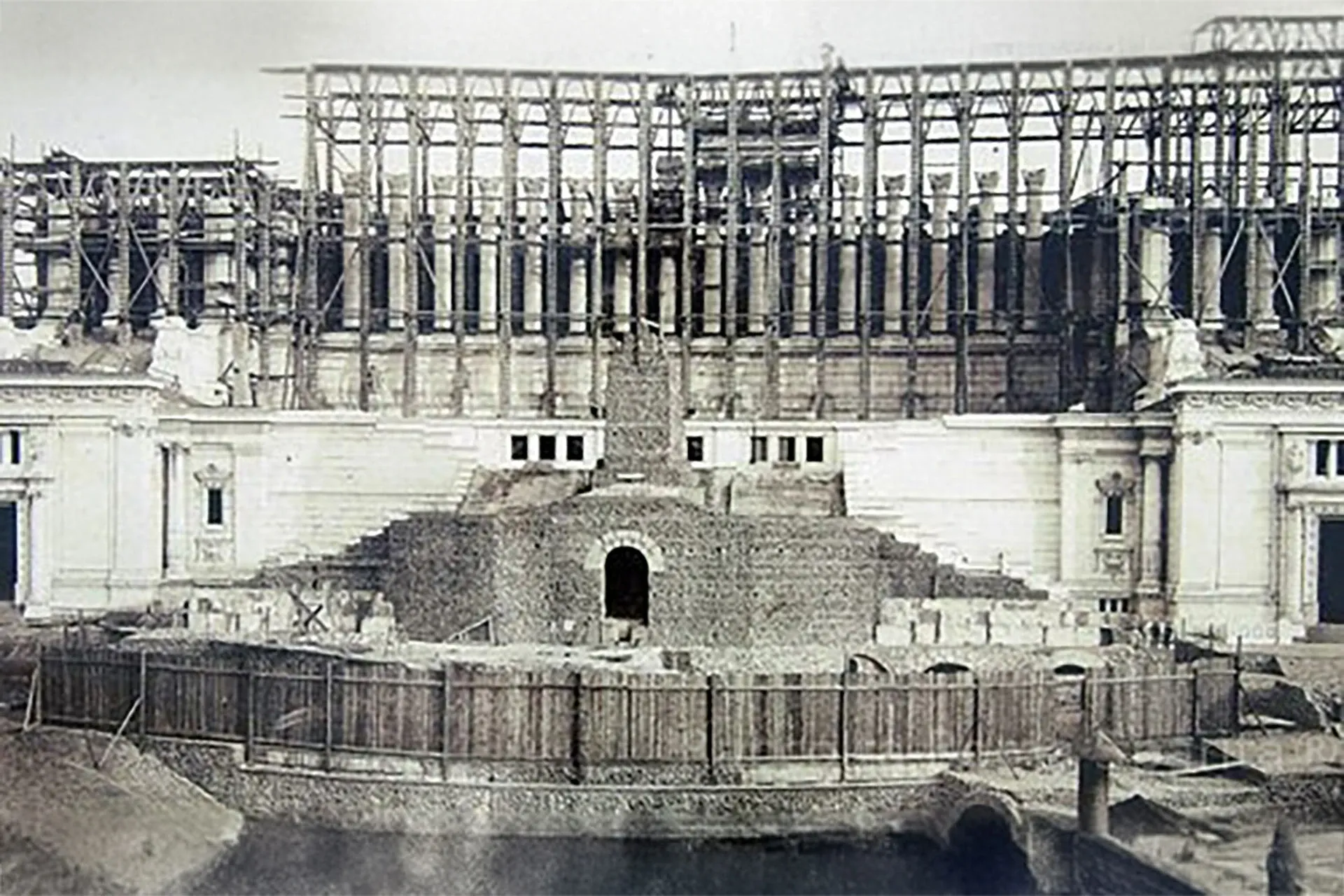
King Umberto I laid the foundation stone on 22 March 1885. Construction required major changes to the northern slope of the Capitoline Hill. Streets and buildings from later historical periods were removed so that the monument could dominate Piazza Venezia and stand apart from the dense urban fabric around it.
Those demolitions remain part of the Vittoriano's contested history. The project expressed the confidence of the new state, but it also erased medieval and Renaissance fabric. Archaeological discoveries and technical challenges repeatedly complicated the work, contributing to a building campaign that continued for decades.
Architecture and Materials
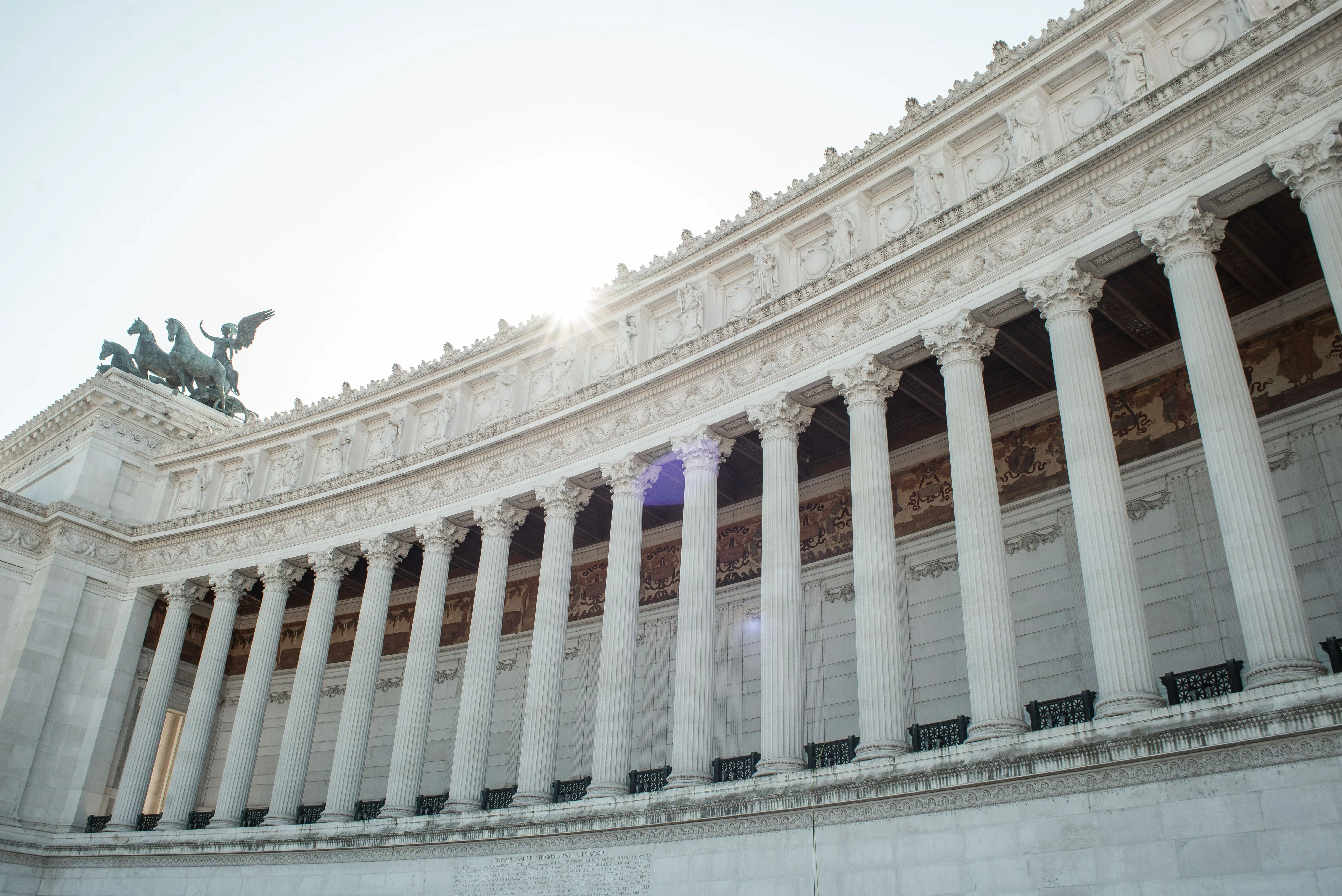
The Vittoriano is organised as a sequence of rising platforms. Monumental stairs lead to the altar and equestrian statue; lateral stairways continue towards Terrazza Italia, while the great portico crowns the composition. Quadrigae with winged Victories mark the ends of the roofline.
The pale stone is Botticino marble from northern Italy, chosen for its durable, luminous surface. Its colour contrasts sharply with Rome's warmer travertine and brick, one reason the building attracted strong reactions. Sculpture is not applied decoration alone: fountains, allegories, regional figures and inscriptions carry the monument's political programme.
The Equestrian Statue
Enrico Chiaradia designed the enormous bronze figure of Victor Emmanuel II on horseback; Emilio Gallori completed the work after Chiaradia's death. Positioned above the altar, the statue makes the king the visual centre of the entire complex and can be seen far across Piazza Venezia.
Eugenio Maccagnani created the marble base, delivered in time for the 1911 inauguration. Fourteen female personifications represent cities with major roles in Italian history, including Turin, Florence, Venice, Palermo, Milan and Rome's wider cultural inheritance. Military reliefs below refer to the forces involved in the wars of unification.
The Altare della Patria
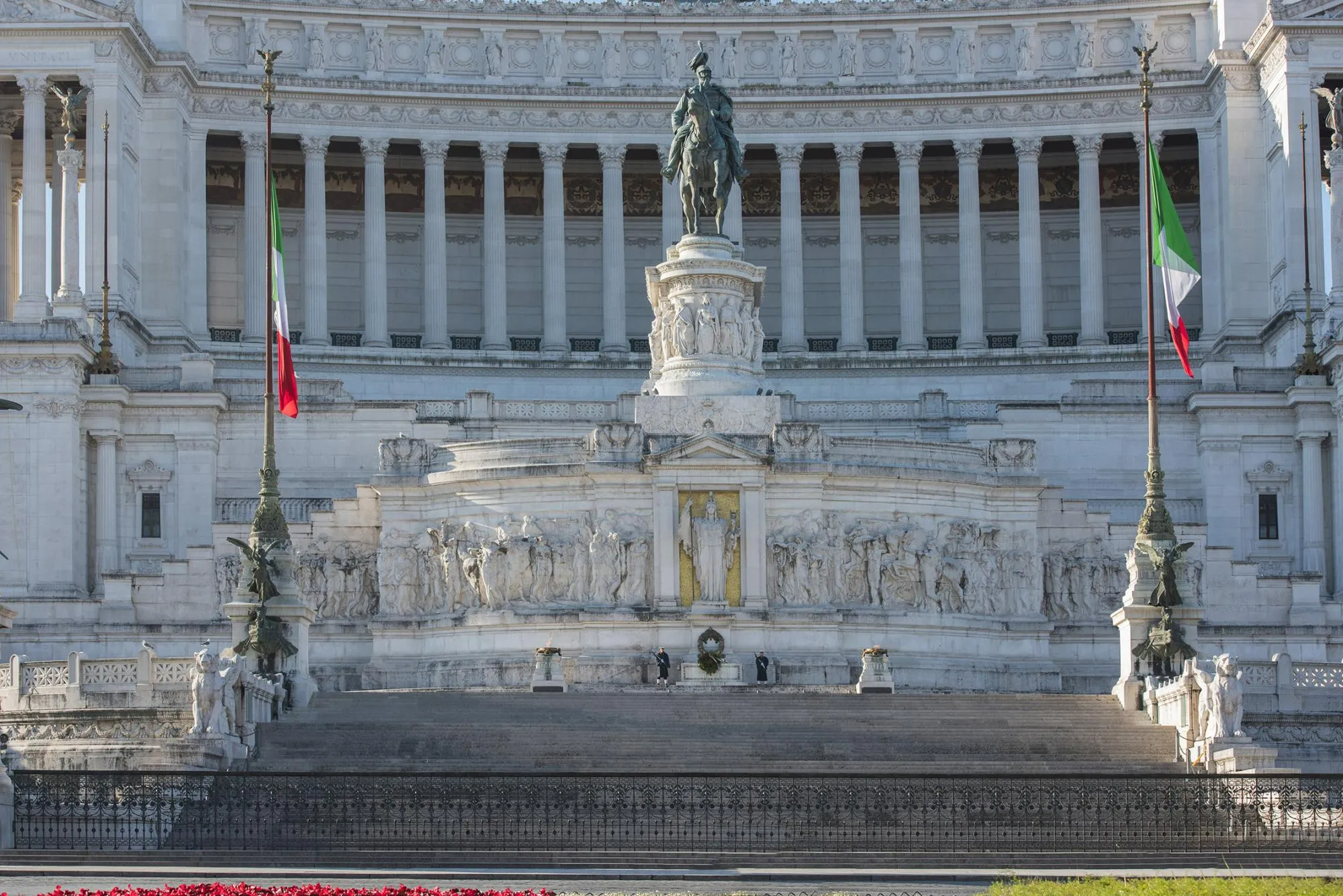
The Altare della Patria occupies the centre of the Vittoriano beneath the equestrian statue. Sacconi conceived the setting, while Angelo Zanelli won the competition to create its sculptural decoration. His long reliefs centre on the figure of Roma and develop themes of labour, civic virtue and love of country.
Although visitors often call the entire monument the Altare della Patria, the name properly identifies this central altar. Understanding that distinction helps clarify the complex: the Vittoriano commemorates Victor Emmanuel II, while the altar and later tomb concentrate the site's role as a national shrine.
The Tomb of the Unknown Soldier
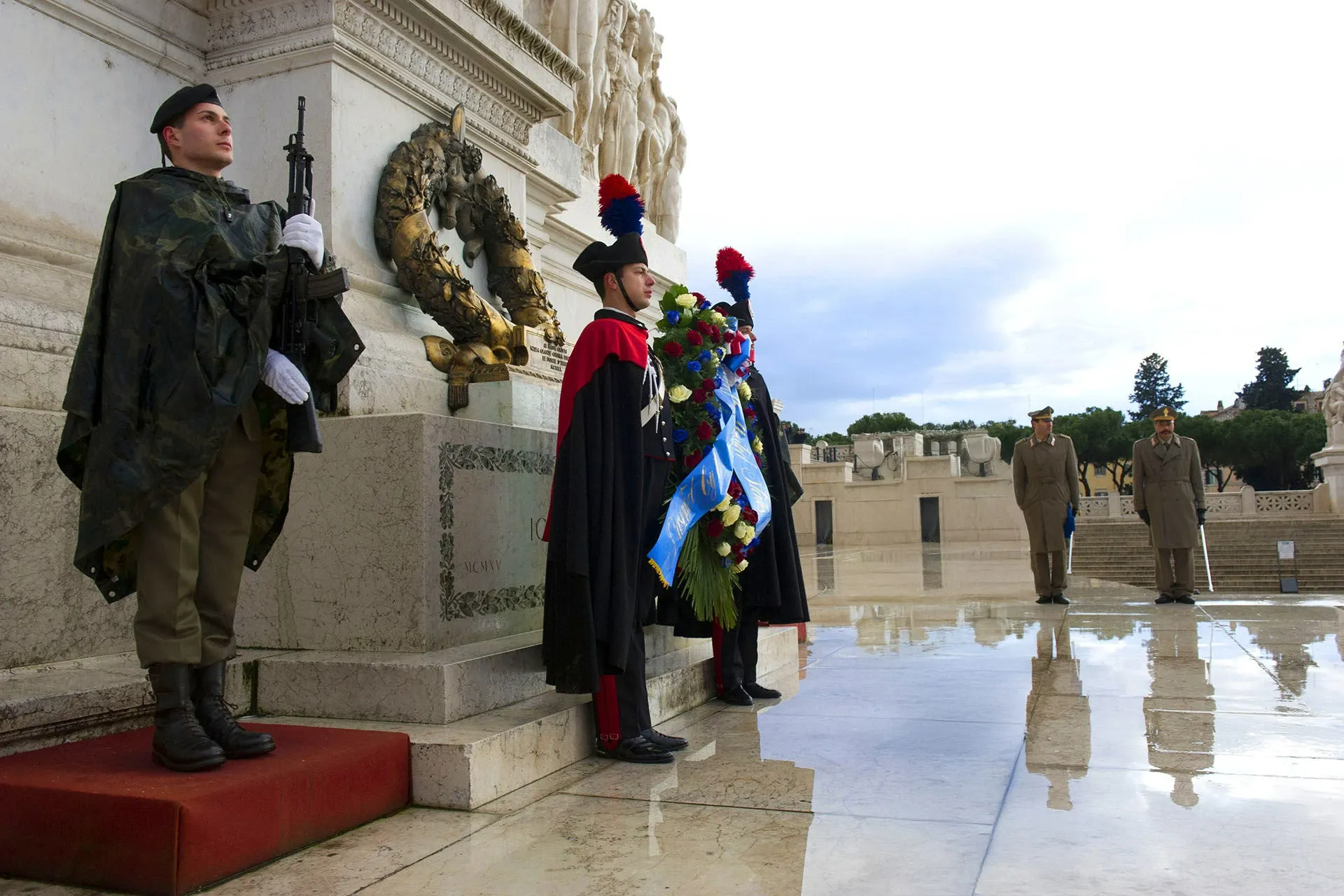
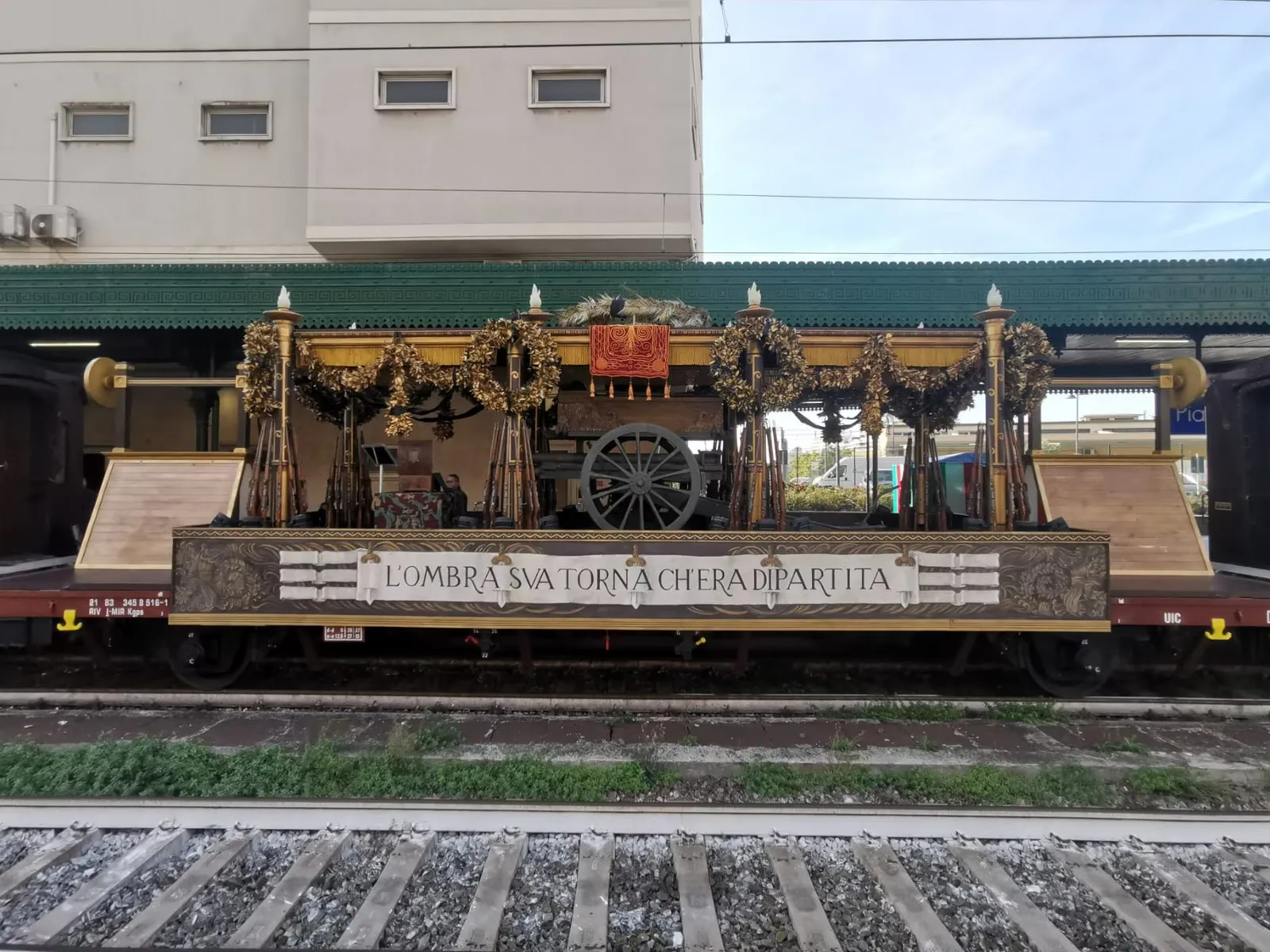
After the First World War, Italy chose an unidentified serviceman to represent all those whose bodies had not been recognised. Maria Bergamas, whose son had died in the war and whose remains were never identified, selected the coffin at Aquileia from eleven unknown soldiers.
The coffin travelled by train to Rome and was buried at the Altare della Patria on 4 November 1921. An honour guard has watched the tomb continuously since that day, and eternal flames burn beside it. State ceremonies still place wreaths here, making the monument an active place of remembrance rather than only a historic attraction.
Allegories, Cities and Regions
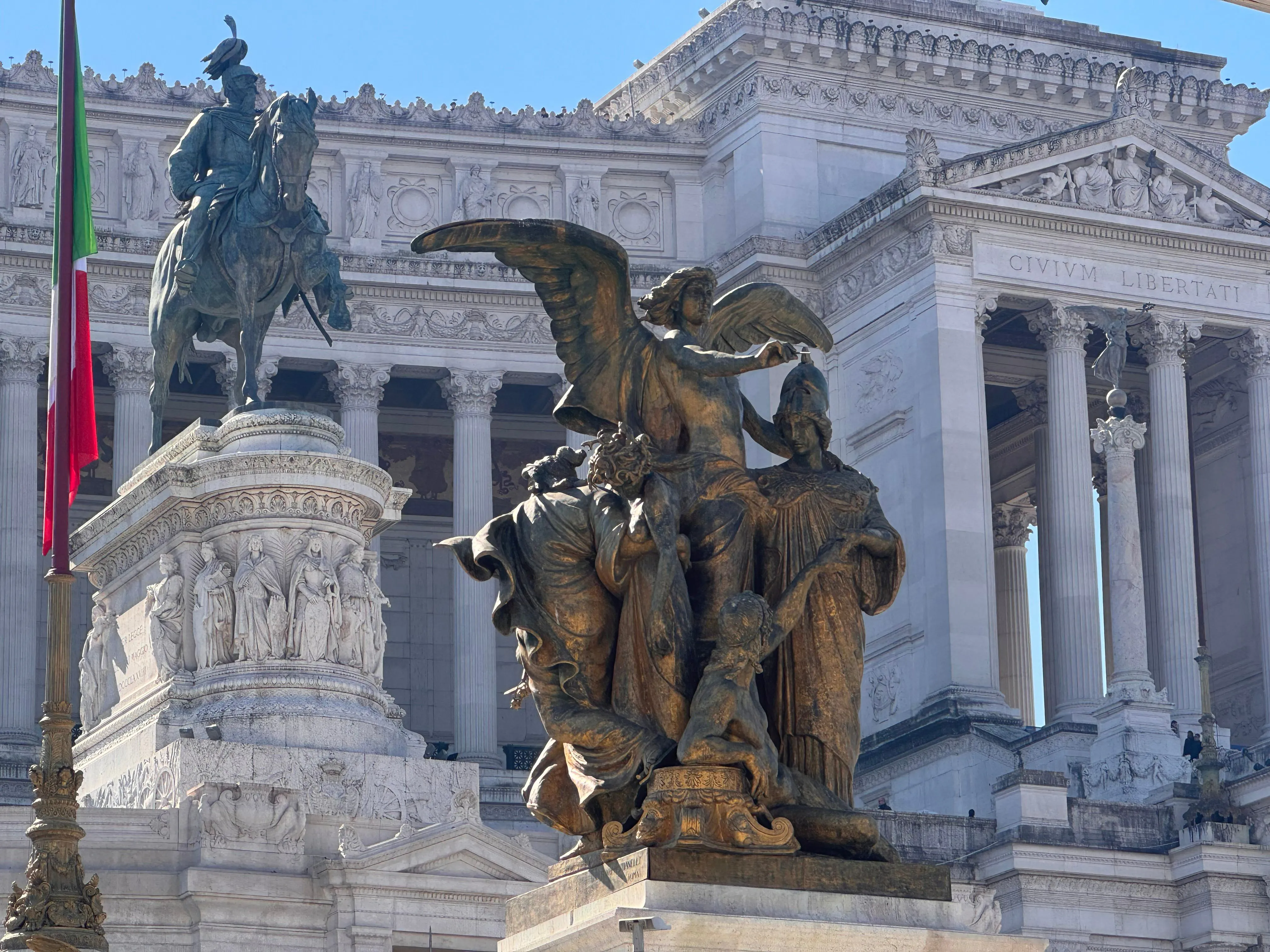
The first balustrade carries four major groups: Strength, Concord, Sacrifice and Right. Created by leading sculptors of the period, they translate values claimed by the young kingdom into human figures. Nearby fountains personify the Adriatic and Tyrrhenian seas, framing Italy through its geography.
Above, sculptures representing Italy's regions line the portico, while the city figures around the equestrian statue evoke a longer history predating national unification. The programme deliberately combines local identities within a single monument, giving visual form to the difficult idea of unity through diversity.
The 1911 Inauguration
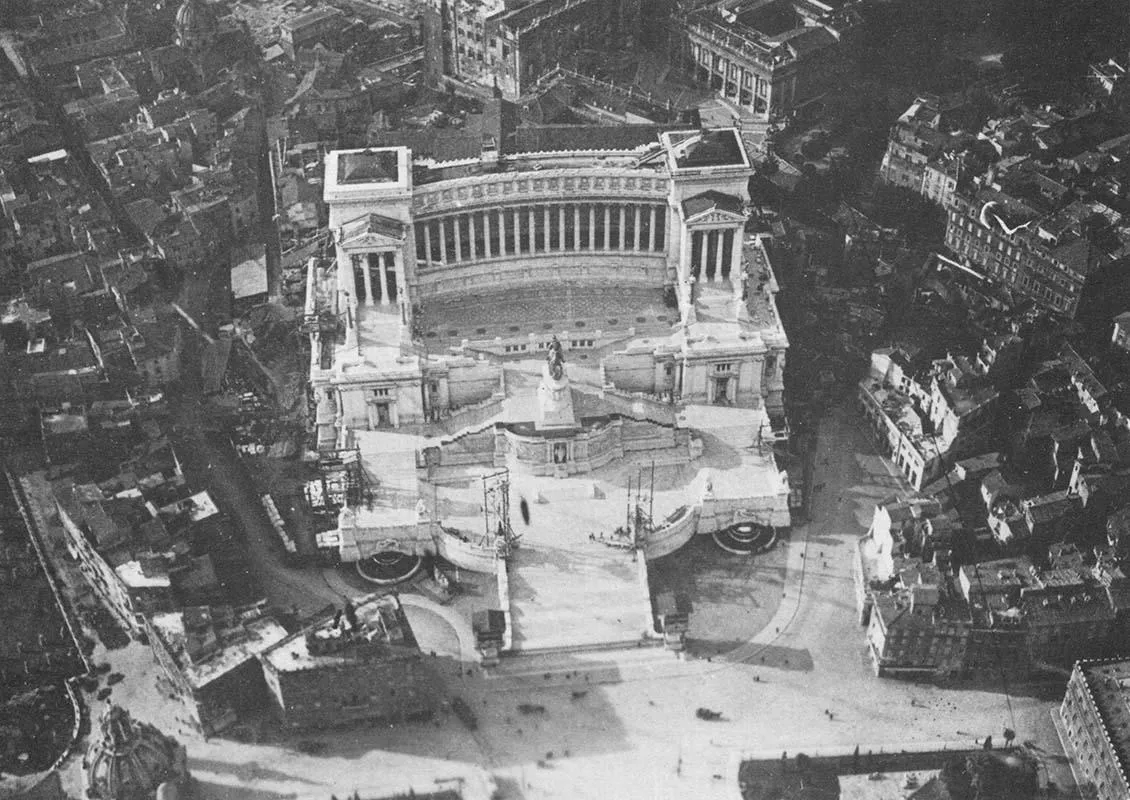
The Vittoriano was inaugurated on 4 June 1911 during celebrations for the fiftieth anniversary of Italian unification. King Victor Emmanuel III attended, along with officials, veterans and large crowds. The ceremony opened the monument before every architectural and museum space was complete.
Its scale made an immediate impact on Rome's skyline and public life. Supporters saw a fitting national monument; critics objected to its size, colour, cost and disruption of the Capitoline setting. Those competing responses have followed the building throughout its history.
Completion and the Risorgimento Museum
Work continued after 1911. The great quadrigae and other elements were added as the complex moved towards completion in the 1930s. Interior spaces were intended to preserve documents and objects connected with the Risorgimento, the political and military movement that produced Italian unification.
The Central Museum of the Risorgimento had been conceived in 1884 but opened permanently only in 1970. Its collections use flags, weapons, paintings, manuscripts and personal objects to trace events and individuals from the late eighteenth century through the First World War.
Fascism, Republic and National Ritual
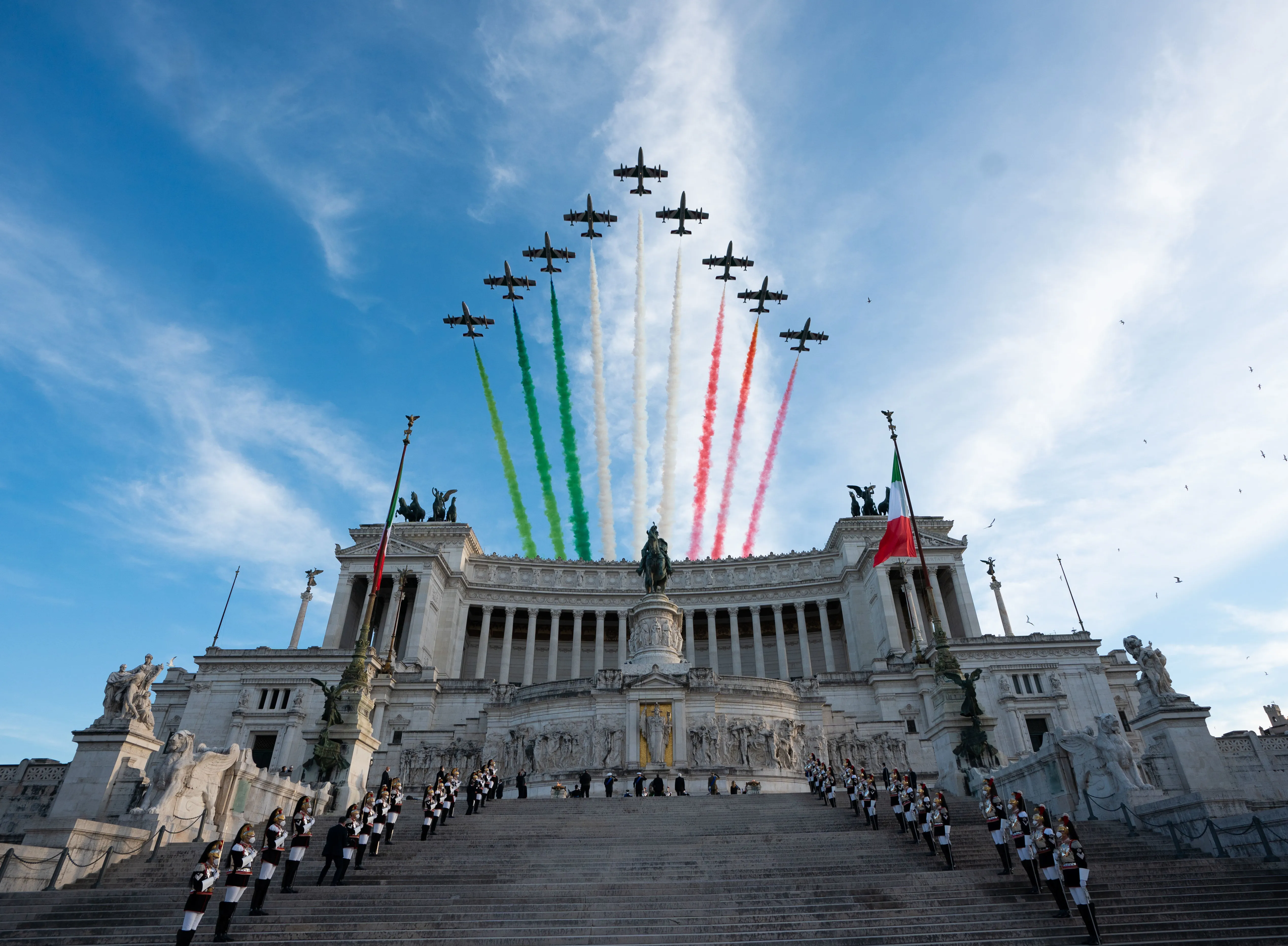
During the Fascist period, the regime used the Vittoriano's monumental spaces for mass ceremony and political display. This association affected the building's reputation, even though its origins lay in the liberal monarchy and the nineteenth-century project of unification.
After the 1946 referendum ended the monarchy, the Italian Republic retained the Tomb of the Unknown Soldier as a central ceremonial site. Official wreath-laying on dates such as Liberation Day, Republic Day and National Unity and Armed Forces Day reframed the monument around constitutional remembrance and public service.
Restoration and the Panoramic Terrace
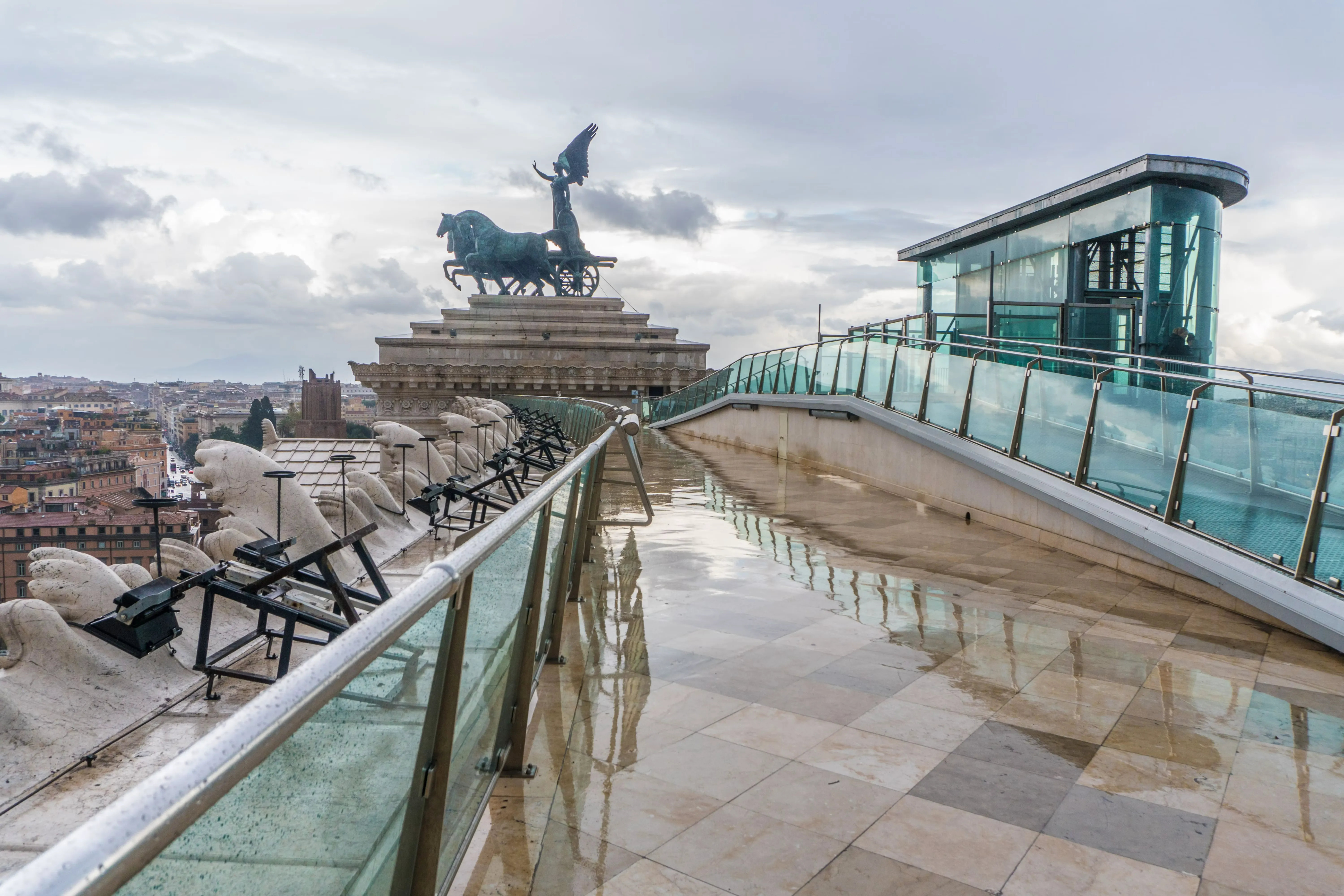
Long conservation campaigns have addressed the effects of pollution, weather and intensive use on the marble and bronze. Museum routes and public spaces have also been reorganised to make more of the vast interior accessible and to reconnect architecture with the history it commemorates.
Glass panoramic lifts opened in 2007, carrying visitors from Terrazza Italia to the roof. Their contemporary design prompted debate, but the summit view changed how many people experience the monument: the Vittoriano now functions as both a place to interpret modern Italy and one of Rome's broadest viewpoints.
The Vittoriano Today
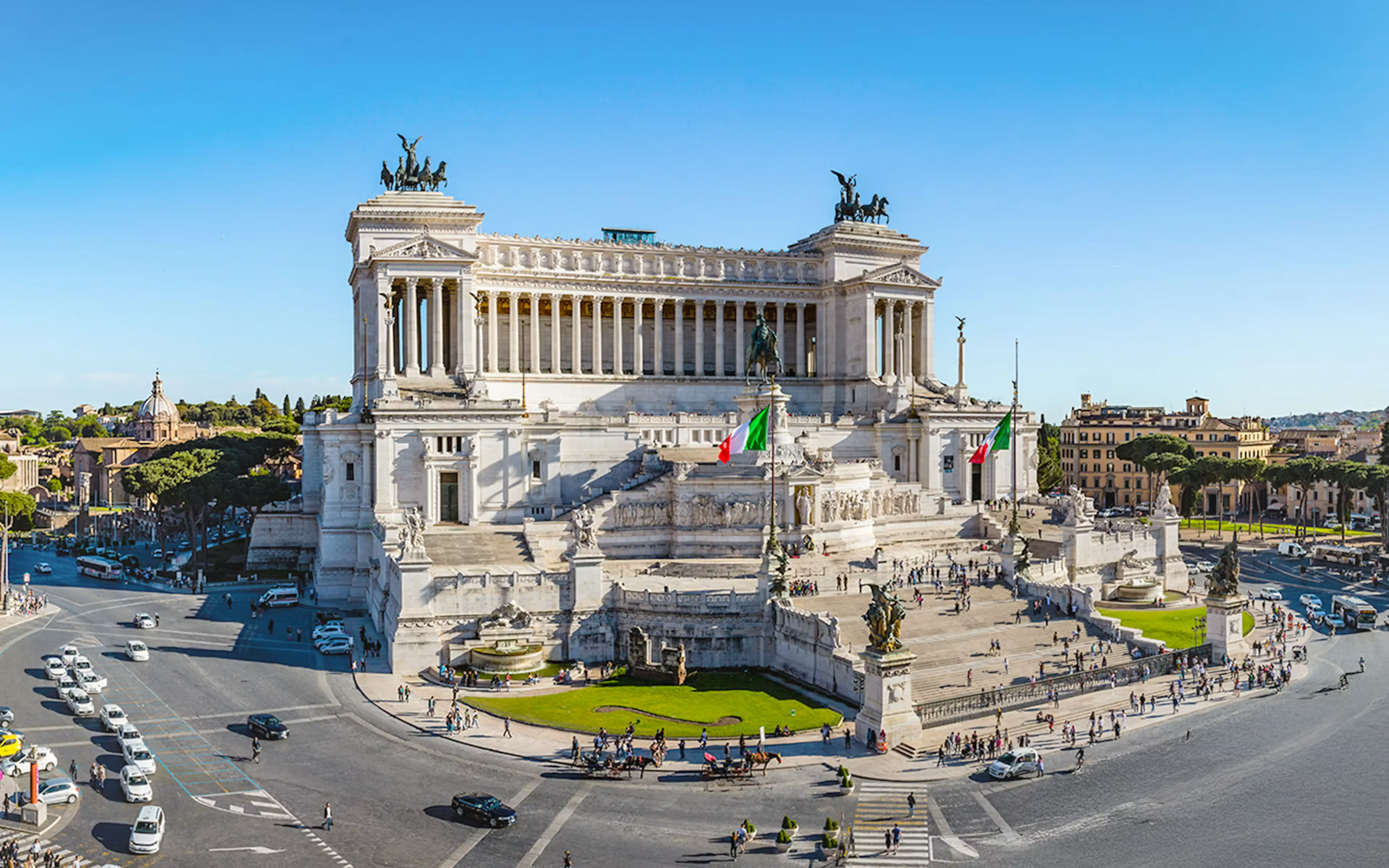
Today the VIVE institute manages the Vittoriano together with Palazzo Venezia. Free access to the principal monument coexists with ticketed museums, the main portico, exhibitions and panoramic terrace. Educational and accessible programmes broaden the ways visitors can engage with the site.
The complex remains impossible to reduce to a single meaning. It is a royal memorial, a history of unification in stone, a war shrine, a contested urban intervention and a republican ceremonial stage. Reading those layers makes a visit far richer than simply climbing for the view.
Table of Contents
A Monument for Victor Emmanuel II
Victor Emmanuel II died on 9 January 1878, less than eight years after Rome became the capital of the Kingdom of Italy. Parliament quickly approved a national monument to the first king of unified Italy. The project was intended to commemorate the monarch, but it also had to give architectural form to a state whose regions had only recently been brought together.
Its position beside the Capitoline Hill was highly symbolic. Ancient Rome, the civic traditions of the Campidoglio and the new capital could all be read from one site. This ambition explains why the complex soon became more than a royal memorial: sculpture, inscriptions and ceremonial spaces turned it into a statement about the nation's origins and ideals.
Competitions and Sacconi's Design
An initial international competition failed to produce a workable result. A second competition restricted to Italian architects selected Giuseppe Sacconi's proposal in 1882. His design placed a broad stairway, central altar, equestrian statue and curved portico on a strong axial line facing the city.
Sacconi drew on classical sanctuaries rather than copying a single ancient building. The monument's symmetrical terraces and long Corinthian colonnade created a modern civic stage. After Sacconi died in 1905, architects including Gaetano Koch, Manfredo Manfredi and Pio Piacentini continued the project while retaining its main conception.
Building on the Capitoline Hill
King Umberto I laid the foundation stone on 22 March 1885. Construction required major changes to the northern slope of the Capitoline Hill. Streets and buildings from later historical periods were removed so that the monument could dominate Piazza Venezia and stand apart from the dense urban fabric around it.
Those demolitions remain part of the Vittoriano's contested history. The project expressed the confidence of the new state, but it also erased medieval and Renaissance fabric. Archaeological discoveries and technical challenges repeatedly complicated the work, contributing to a building campaign that continued for decades.
Architecture and Materials
The Vittoriano is organised as a sequence of rising platforms. Monumental stairs lead to the altar and equestrian statue; lateral stairways continue towards Terrazza Italia, while the great portico crowns the composition. Quadrigae with winged Victories mark the ends of the roofline.
The pale stone is Botticino marble from northern Italy, chosen for its durable, luminous surface. Its colour contrasts sharply with Rome's warmer travertine and brick, one reason the building attracted strong reactions. Sculpture is not applied decoration alone: fountains, allegories, regional figures and inscriptions carry the monument's political programme.
The Equestrian Statue
Enrico Chiaradia designed the enormous bronze figure of Victor Emmanuel II on horseback; Emilio Gallori completed the work after Chiaradia's death. Positioned above the altar, the statue makes the king the visual centre of the entire complex and can be seen far across Piazza Venezia.
Eugenio Maccagnani created the marble base, delivered in time for the 1911 inauguration. Fourteen female personifications represent cities with major roles in Italian history, including Turin, Florence, Venice, Palermo, Milan and Rome's wider cultural inheritance. Military reliefs below refer to the forces involved in the wars of unification.
The Altare della Patria
The Altare della Patria occupies the centre of the Vittoriano beneath the equestrian statue. Sacconi conceived the setting, while Angelo Zanelli won the competition to create its sculptural decoration. His long reliefs centre on the figure of Roma and develop themes of labour, civic virtue and love of country.
Although visitors often call the entire monument the Altare della Patria, the name properly identifies this central altar. Understanding that distinction helps clarify the complex: the Vittoriano commemorates Victor Emmanuel II, while the altar and later tomb concentrate the site's role as a national shrine.
The Tomb of the Unknown Soldier
After the First World War, Italy chose an unidentified serviceman to represent all those whose bodies had not been recognised. Maria Bergamas, whose son had died in the war and whose remains were never identified, selected the coffin at Aquileia from eleven unknown soldiers.
The coffin travelled by train to Rome and was buried at the Altare della Patria on 4 November 1921. An honour guard has watched the tomb continuously since that day, and eternal flames burn beside it. State ceremonies still place wreaths here, making the monument an active place of remembrance rather than only a historic attraction.
Allegories, Cities and Regions
The first balustrade carries four major groups: Strength, Concord, Sacrifice and Right. Created by leading sculptors of the period, they translate values claimed by the young kingdom into human figures. Nearby fountains personify the Adriatic and Tyrrhenian seas, framing Italy through its geography.
Above, sculptures representing Italy's regions line the portico, while the city figures around the equestrian statue evoke a longer history predating national unification. The programme deliberately combines local identities within a single monument, giving visual form to the difficult idea of unity through diversity.
The 1911 Inauguration
The Vittoriano was inaugurated on 4 June 1911 during celebrations for the fiftieth anniversary of Italian unification. King Victor Emmanuel III attended, along with officials, veterans and large crowds. The ceremony opened the monument before every architectural and museum space was complete.
Its scale made an immediate impact on Rome's skyline and public life. Supporters saw a fitting national monument; critics objected to its size, colour, cost and disruption of the Capitoline setting. Those competing responses have followed the building throughout its history.
Completion and the Risorgimento Museum
Work continued after 1911. The great quadrigae and other elements were added as the complex moved towards completion in the 1930s. Interior spaces were intended to preserve documents and objects connected with the Risorgimento, the political and military movement that produced Italian unification.
The Central Museum of the Risorgimento had been conceived in 1884 but opened permanently only in 1970. Its collections use flags, weapons, paintings, manuscripts and personal objects to trace events and individuals from the late eighteenth century through the First World War.
Fascism, Republic and National Ritual
During the Fascist period, the regime used the Vittoriano's monumental spaces for mass ceremony and political display. This association affected the building's reputation, even though its origins lay in the liberal monarchy and the nineteenth-century project of unification.
After the 1946 referendum ended the monarchy, the Italian Republic retained the Tomb of the Unknown Soldier as a central ceremonial site. Official wreath-laying on dates such as Liberation Day, Republic Day and National Unity and Armed Forces Day reframed the monument around constitutional remembrance and public service.
Restoration and the Panoramic Terrace
Long conservation campaigns have addressed the effects of pollution, weather and intensive use on the marble and bronze. Museum routes and public spaces have also been reorganised to make more of the vast interior accessible and to reconnect architecture with the history it commemorates.
Glass panoramic lifts opened in 2007, carrying visitors from Terrazza Italia to the roof. Their contemporary design prompted debate, but the summit view changed how many people experience the monument: the Vittoriano now functions as both a place to interpret modern Italy and one of Rome's broadest viewpoints.
The Vittoriano Today
Today the VIVE institute manages the Vittoriano together with Palazzo Venezia. Free access to the principal monument coexists with ticketed museums, the main portico, exhibitions and panoramic terrace. Educational and accessible programmes broaden the ways visitors can engage with the site.
The complex remains impossible to reduce to a single meaning. It is a royal memorial, a history of unification in stone, a war shrine, a contested urban intervention and a republican ceremonial stage. Reading those layers makes a visit far richer than simply climbing for the view.