Things to See Near Altare della Patria in Rome
Plan a walk from the Vittoriano to the Capitoline, Trajan's Forum, Roman Forum, Palazzo Venezia and central Rome landmarks nearby.
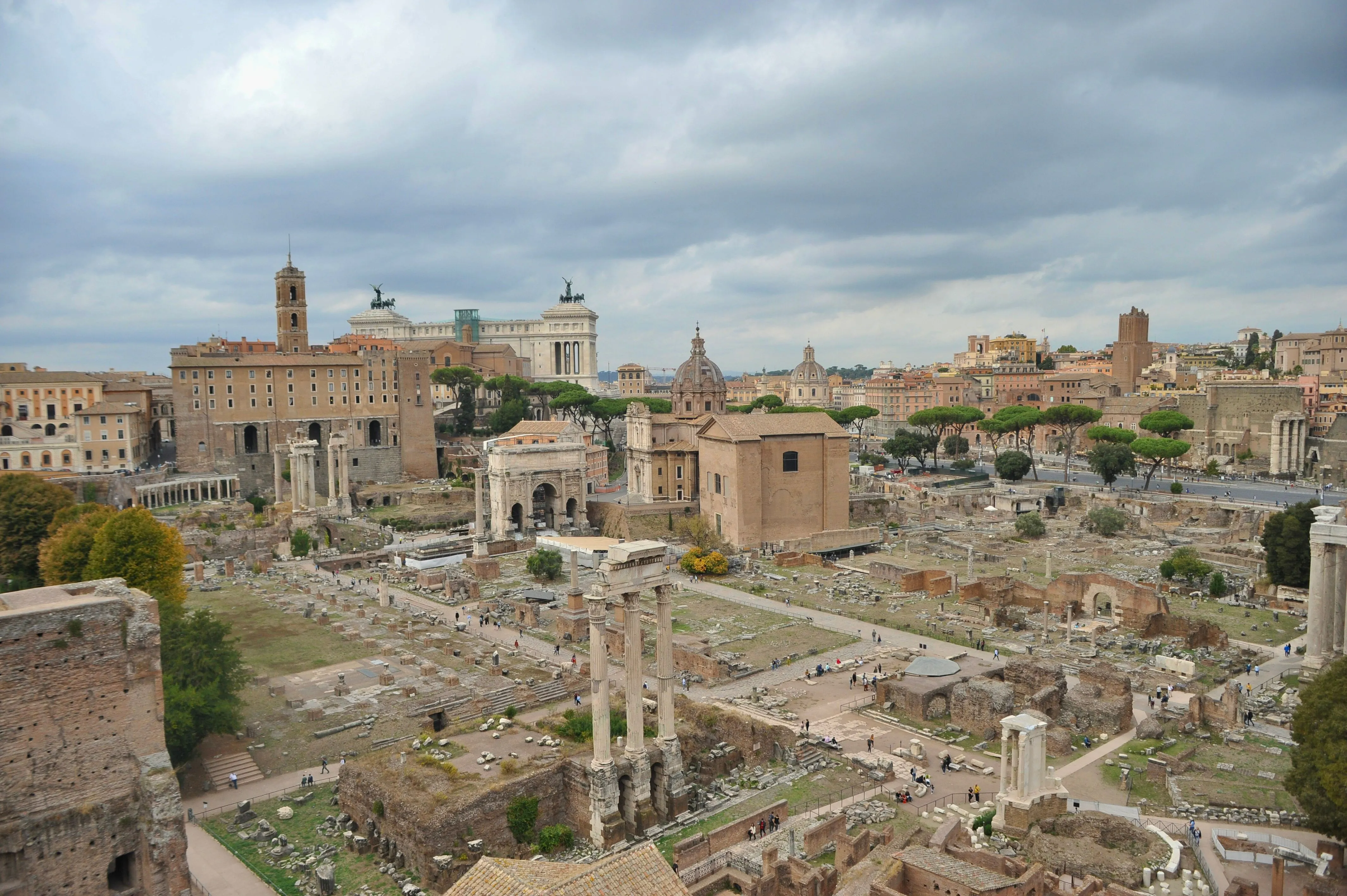
Piazza Venezia is one of Rome's great hinges. Ancient forums lie to one side, medieval churches rise immediately behind the Vittoriano, Renaissance palaces face the square and Baroque streets lead toward the Pantheon. The challenge is not finding something nearby; it is choosing a route that avoids zigzagging across the centre.
Option 1: Capitoline Hill and ancient Rome
After the Vittoriano, move toward the adjacent Capitoline Hill. The cordonata leads to Michelangelo's Piazza del Campidoglio and the Capitoline Museums. Even without entering, the square and viewpoints toward the Roman Forum justify the short climb.
Allow at least two hours if visiting the museums. Their ancient sculpture and history provide a productive contrast with the modern classicism of the Vittoriano: one displays surviving works from antiquity, while the other shows how a modern state borrowed antiquity's visual authority.
Continue toward the Roman Forum and Palatine only if you have a valid ticket and several hours. These archaeological areas are not a quick add-on. For a lighter extension, use public viewpoints before walking along Via dei Fori Imperiali.
Option 2: Trajan's Forum and the Imperial Fora
Trajan's Column stands almost beside Piazza Venezia. Its spiral relief and surrounding forum belong to the ancient city, while modern roads and the Vittoriano reveal later interventions. The area offers one of Rome's clearest examples of historical layers competing for space.
Walk southeast along Via dei Fori Imperiali for views into the forums and onward to the Colosseum. The route is visually straightforward but exposed in hot weather. Reverse it in late afternoon if the sun and crowds make the longer walk uncomfortable.
Option 3: Palazzo Venezia
Palazzo Venezia is directly across the square and belongs to the same VIVE institute. Its National Museum, Renaissance rooms and collections differ completely from the Vittoriano. The combined ticket currently covers both venues and remains valid for seven days.
That validity removes the pressure to cross immediately. If energy is good, enter at Via del Plebiscito 118 or Piazza San Marco 49 according to current guidance. If not, return on another day and give the palace the attention it deserves.
Option 4: Aracoeli and the historic centre
The Basilica of Santa Maria in Aracoeli sits beside and above the Vittoriano. Its long history, interior art and steep independent staircase create a striking contrast with Sacconi's planned monument. Check church access and services, dress appropriately and remember that it is an active place of worship.
From Piazza Venezia, walk west toward Largo di Torre Argentina, the Pantheon and Piazza Navona. This route moves from modern national Rome into the dense historic centre. It works well after a morning Vittoriano visit because food and rest options become more frequent away from the traffic junction.
Option 5: Via del Corso and Trevi
Via del Corso begins at Piazza Venezia and runs north through central Rome. Side streets lead toward the Trevi Fountain, while continuing farther reaches major shopping and civic areas. This is the easiest choice for visitors who want an urban walk rather than another museum.
Trevi is close in map distance but crowding slows progress. Do not pair it with a fixed appointment immediately after a rooftop slot without a time buffer.
Three realistic combinations
Half-day history route
Vittoriano exterior and museum, Capitoline viewpoints, then Trajan's Column. This keeps the focus on how modern Italy related to ancient Rome.
Full-day major-sites route
Early Vittoriano roof, Capitoline Museums, lunch, then a pre-booked Roman Forum and Palatine visit. This is rewarding but demanding and should not include Palazzo Venezia as well.
Easy central walk
Vittoriano memorial and panorama, Palazzo Venezia garden or museum according to energy, then Pantheon and Piazza Navona. Use the combined ticket on another day if necessary.
Practical cautions
Cross Piazza Venezia only at marked points. Road and public-transport construction can change pedestrian routes. Wear suitable shoes for hills, ancient paving and marble steps, and carry water in warm weather.
Opening hours and tickets differ across every site mentioned. The Vittoriano's current schedule cannot be assumed for churches, archaeological areas or municipal museums. Verify official sources and reserve the Roman Forum or Capitoline Museums separately when required.
Understand the historical layers around the square
The nearby sites do more than save travel time. Trajan's Column and Forum show an imperial centre later reused and excavated. The Capitoline expresses ancient civic identity through a Renaissance square and modern museums. Santa Maria in Aracoeli preserves a religious presence beside the national monument. Palazzo Venezia introduces Renaissance and papal Rome as well as the building's later political associations.
Seen in sequence, these places explain why the Vittoriano's location was so powerful and controversial. Modern Italy placed its monument among earlier centres of imperial, municipal and ecclesiastical authority, then reshaped streets and sightlines around it.
Plan crossings, not just distances
Piazza Venezia can make a nearby attraction slower to reach than its map distance suggests. Use marked pedestrian crossings and current barriers; never follow a straight line through traffic. Metro C construction remains active in 2026, so walking channels and bus stops may move.
For the Capitoline and Aracoeli, changes in elevation matter more than distance. For the Pantheon and Trevi routes, crowd density matters. For the Colosseum, heat and exposure along Via dei Fori Imperiali matter. Add a buffer appropriate to the route rather than applying one walking speed to every direction.
Avoid an overfilled ancient-Rome day
The Roman Forum and Palatine require sustained outdoor walking and their own current ticket arrangements. Combining them with the full Vittoriano, Palazzo Venezia and Capitoline Museums is not efficient simply because all are close. Choose one major collection or archaeological area after the monument.
A strong day might pair the Vittoriano and Capitoline Museums, or the Vittoriano and a pre-booked Forum visit. Palazzo Venezia can move to another day because the current combined VIVE ticket remains valid for seven days. Geographic proximity should support depth, not produce an exhausting checklist.
The best nearby itinerary follows one direction and one theme. The Vittoriano already connects many periods; the rest of the day should deepen that connection rather than turn central Rome into a checklist.
Tentang penulis

Rome Visitor Guide
Panduan independen ini disusun berdasarkan informasi VIVE, Kementerian Kebudayaan Italia, dan museum untuk membantu pengunjung membedakan akses gratis dari pengalaman bertiket.
Tags
Comments (0)
Loading comments...