Vittoriano Hours, Best Time to Visit and Duration
Check current Vittoriano hours, last-entry times and practical advice for morning, sunset, summer and winter visits in central Rome.
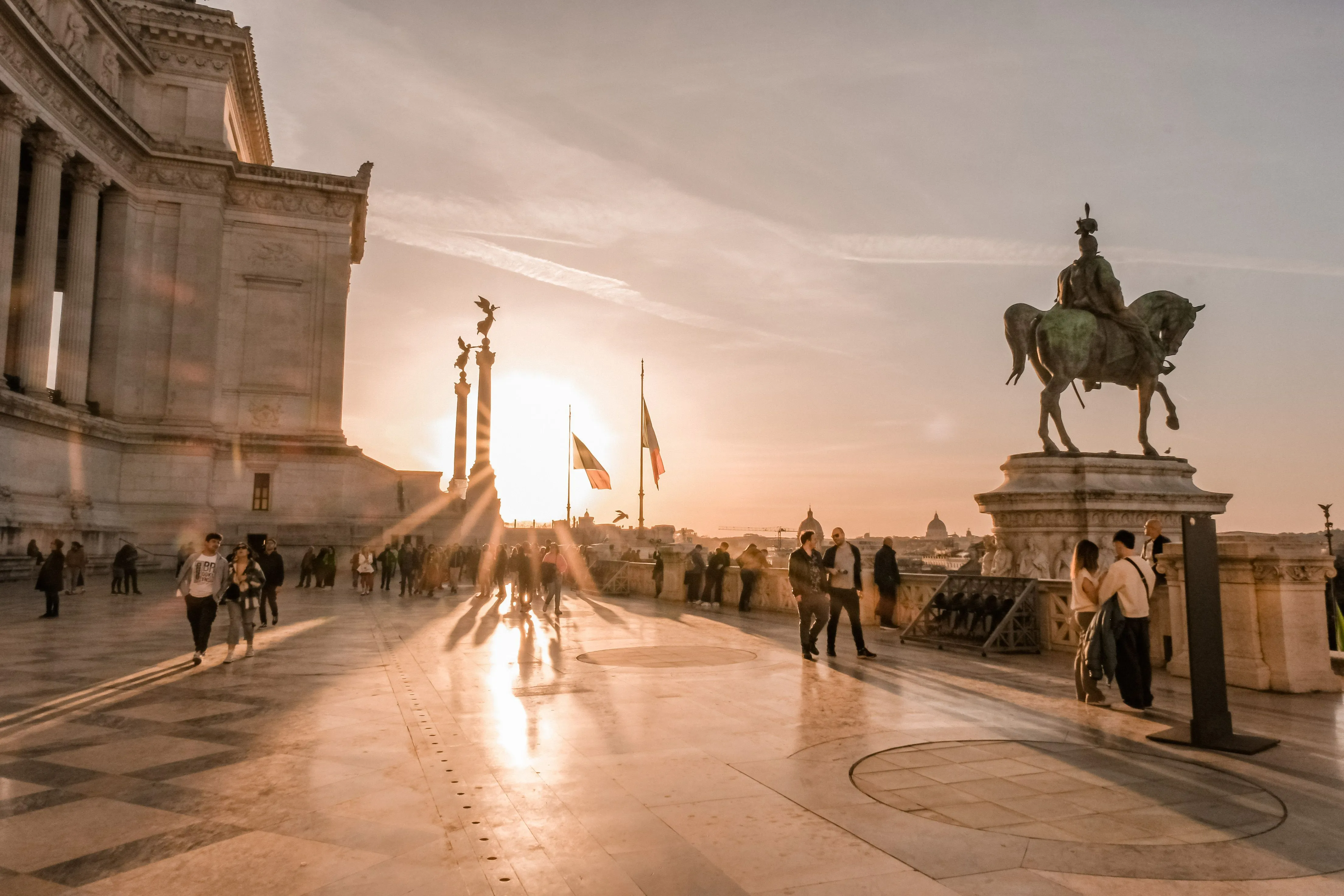
The best time at the Vittoriano depends on what you want from it. Early visitors gain cooler steps and clearer space around the memorial; late-afternoon visitors may find warmer light on Rome's roofs. Museum visitors need enough time before last admission, while photographers must accept that a dramatic sunset can also bring wind, queues and uncertain visibility.
Official hours at publication
VIVE currently lists the Vittoriano as open every day from 9:30 to 19:30, with last entry at 18:45. The Panoramic Terrace, Central Museum of the Risorgimento and Sommoportico also operate from 9:30 to 19:30, but their last admission is 19:00. The ticket office closes at 18:45.
The same broad daily schedule simplifies planning, but it should never be treated as permanent. State ceremonies, maintenance, severe weather and special events can affect a route or individual area. Check the official VIVE site on the day, particularly if the panoramic terrace is the only reason for your journey.
Morning: best for comfort and orientation
Arriving close to 9:30 is the safest choice in warm months. Piazza Venezia is already busy, but the monument's stairs have had less time to absorb heat and tour groups are less concentrated. Morning haze varies, yet the light can make details across the Roman Forum easier to distinguish.
An early rooftop visit also works well at the start of a Rome holiday. From the summit you can understand the relationship between the Capitoline Hill, Imperial Fora, Colosseum, Pantheon district and Vatican skyline before exploring them at street level.
Midday: workable, but exposed
The broad pale surfaces provide little shade on the exterior route. In summer, midday is usually the least comfortable period, especially for young children or anyone sensitive to heat. The museum offers an indoor alternative, and the cafeteria-restaurant provides a designated place for refreshments, but moving between levels still involves exposed terraces.
In cooler seasons, midday can be excellent. The sun is higher, temperatures are milder and the central location makes the monument an easy bridge between a morning in the historic centre and an afternoon around the Forum.
Late afternoon and sunset
Warm evening light can be beautiful from the Panoramic Terrace, particularly across domes and ochre roofs. Calculate carefully, however. Sunset time changes substantially through the year, and official closing does not move automatically with it. A winter sunset may occur comfortably within visiting hours; a summer sunset can fall after closing.
Do not arrive at the final admission expecting an unhurried museum visit. Lift capacity and security take time, and last entry is not a promise of a long stay. If the roof matters, plan to reach the paid route at least an hour before the relevant cutoff.
A season-by-season planning guide
Spring usually offers a good balance of daylight and moderate temperatures, but school holidays and long weekends can increase demand. An opening-time visit preserves the rest of the day for the Forum or historic centre. Carry a light layer for the summit even when the square feels mild.
Summer makes timing more consequential. Pale stone, broad stairways and limited shade amplify the heat. The first hour is preferable for the open-air monument; an indoor museum interval can break up the hottest part of the day. Sunset photographs are not always possible because midsummer sunset may occur after closing.
Autumn can combine warm colour with comfortable walking conditions. Short rain showers may leave slippery marble, yet clearer air after a weather front can improve long-distance views. Winter has the shortest daylight but may place sunset within opening hours. Wind on the roof can make the apparent temperature much lower than at street level.
Separate clock time from useful visit time
Published opening hours describe when an area operates, not how long a late arrival can meaningfully spend there. For the museum, count backward from last admission and preserve at least an hour. For the summit, allow for security, ticket checks and lifts in both directions. For Palazzo Venezia, use another day within the ticket's validity rather than crossing the piazza shortly before its own last entry.
If a ceremony or temporary closure affects one level, ask whether the museum or another included site remains available. Flexibility is more valuable here than a minute-by-minute plan because the complex combines an operating memorial, museum and exposed viewpoint.
How much time should you reserve?
A focused look at the exterior, altar and Unknown Soldier takes 30–45 minutes. Add another 30–45 minutes for the glass lift and summit, longer if you enjoy identifying landmarks. The Central Museum deserves at least an hour; a historically curious visitor can easily spend longer among its documents, flags, paintings, weapons and personal objects.
For a balanced first visit, reserve two hours. For the full combined-ticket experience, separate Palazzo Venezia into another session and use the ticket's current seven-day validity.
Weekdays, weekends and ceremonies
Weekday mornings are generally the most predictable choice, though no central Rome landmark is reliably empty. Weekends, public holidays and free-admission Sundays can increase demand. The continuously guarded Tomb of the Unknown Soldier attracts attention, while major civic anniversaries can produce restrictions.
Dates around 25 April, 2 June and 4 November have particular national significance. They may offer ceremonial interest, but they are poor choices for anyone who needs a guaranteed ordinary route.
A weather-based decision
The summit's value depends on conditions. Check cloud, rain and wind as well as temperature. After rain, distant outlines may become crisp, but wet marble requires care. On hazy days, the nearby Forum and Capitoline remain compelling even if St Peter's dome is faint. During storms or strong wind, panoramic access may be modified for safety.
The most reliable plan is flexible: visit early for comfort, reserve enough margin before last admission, and confirm official notices rather than building a tightly timed day around an unverified sunset.
저자 소개

Rome Visitor Guide
이 독립 가이드는 무료 관람과 유료 체험의 차이를 명확히 알 수 있도록 VIVE, 이탈리아 문화부와 박물관 정보를 바탕으로 작성했습니다.
Tags
Comments (0)
Loading comments...