Vittoriano History: Italy's National Monument in Rome
Follow the Vittoriano from its 1878 conception and 1911 inauguration to the Tomb of the Unknown Soldier and its democratic meaning today.
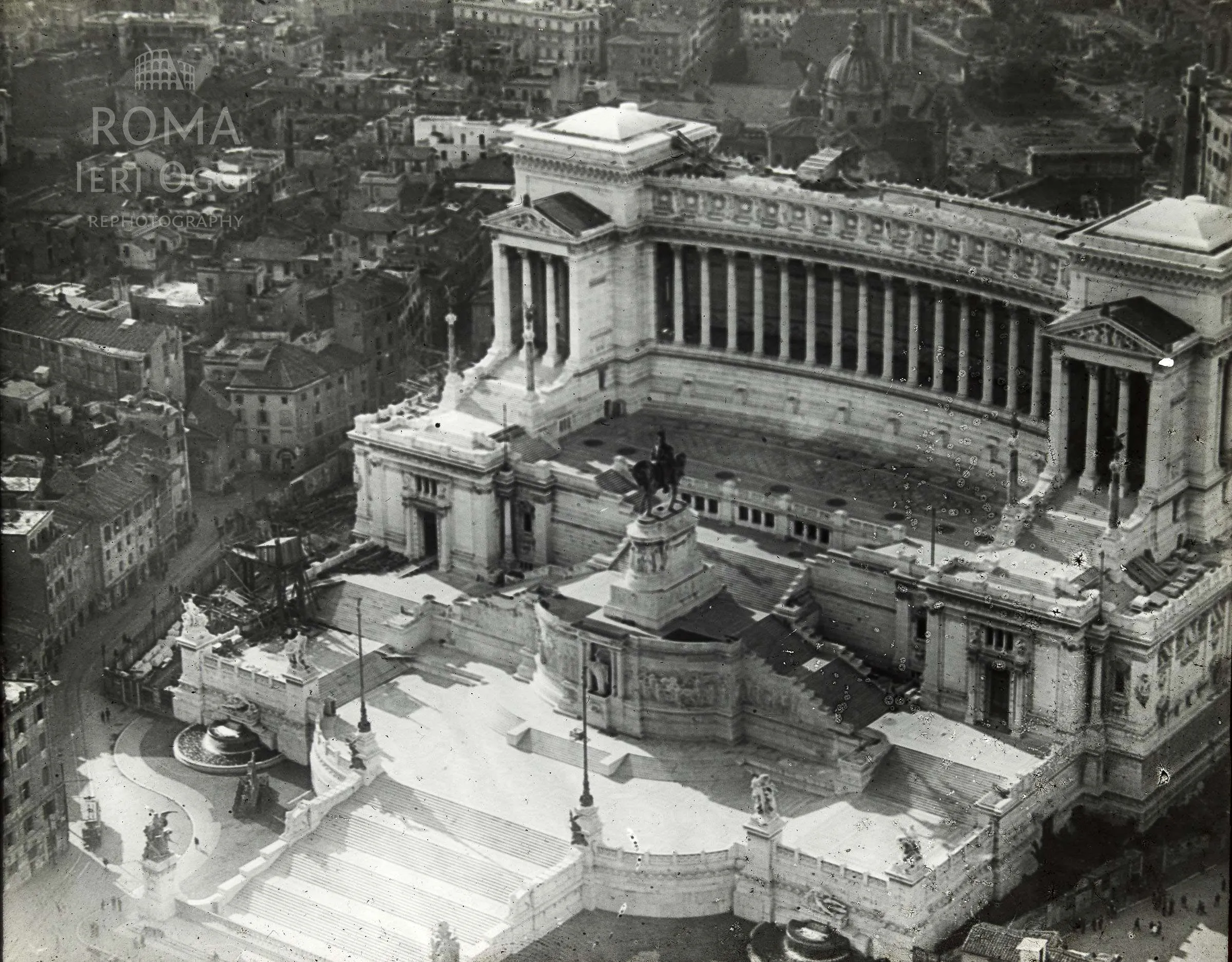
The Vittoriano was not built merely to fill an empty site with a royal statue. It was conceived after the death of Victor Emmanuel II in 1878, when the new Kingdom of Italy needed a monument capable of turning recent political unification into a shared public narrative. Over the following decades, the building accumulated meanings its first planners could not fully anticipate.
A memorial for the first king
Victor Emmanuel II had become king of a united Italy in 1861 and entered Rome as national capital after its annexation in 1870. After his death, Parliament authorized a monument on 16 May 1878. An initial competition failed to settle the project; Giuseppe Sacconi won the second competition in 1884.
Sacconi proposed the northern slope of the Capitoline Hill. The position connected the new state visually with ancient Rome while placing the monument at the head of a transformed urban axis. The choice also demanded extensive demolition in a densely layered historic quarter. Construction was therefore an act of city-making as well as commemoration.
Building a national stage
The foundation stone was laid on 22 March 1885. Sacconi designed a rising sequence of stairs, terraces, sculptural groups and a broad upper portico. The equestrian king occupies the centre, but the architecture extends beyond biography: allegories of cities, seas, virtues and regions translate the geography and ideals of Italy into stone and bronze.
The project outlived its architect, who died in 1905. Other architects and artists continued the programme. The Vittoriano was inaugurated unfinished on 4 June 1911 during celebrations for the fiftieth anniversary of unification. Zanelli's altar was completed in 1925, the quadrigae followed in 1927, and work continued to 1935.
The Unknown Soldier changes the monument
The First World War transformed Italian public memory. In 1921, the remains of an unidentified serviceman were selected from eleven coffins at Aquileia by Maria Bergamas, the mother of a soldier whose body had not been recovered. The coffin travelled by train through Italy, drawing crowds along the route, and was buried at the Vittoriano on 4 November.
This event shifted the emotional centre of the monument. A memorial originally focused on a king now housed an anonymous individual who could represent every bereaved family. The eternal flame and permanent guard made the altar an active shrine. Official wreath-laying ceremonies still connect the building with the life of the republic.
Appropriation and re-interpretation
The Vittoriano's enormous terraces made it attractive for political ceremony during the Fascist period. That use complicated its later reputation, even though the monument originated in the liberal monarchy decades before Fascism. Nearby Palazzo Venezia, from which Benito Mussolini addressed crowds, further fused the area with twentieth-century dictatorship in popular memory.
After the Second World War and the 1946 referendum that created the Italian Republic, the royal monument had to function within a new constitutional order. Rather than being abandoned, its central symbols were re-read. The Unknown Soldier, national tricolour and Risorgimento collections provided points of continuity, while official interpretation now emphasizes an anti-fascist, democratic and European Italy.
A precise construction chronology
The sequence of dates corrects the impression that the Vittoriano appeared fully formed in 1911. Parliament authorized the monument on 16 May 1878. Sacconi won the second design competition in 1884, and the foundation stone was laid on 22 March 1885. The state then sustained a project involving excavation, quarrying, major sculpture commissions and urban demolition over several generations.
The 1911 inauguration deliberately marked fifty years since the proclamation of the Kingdom of Italy, but the building was unfinished. The equestrian monument and much of Sacconi's architectural framework were present; important parts of the symbolic crown were not. Angelo Zanelli's Altar of the Fatherland reached completion in 1925, the two quadrigae were installed in 1927, and works continued until 1935. These dates also make clear that the monument was conceived and substantially built before Fascism, even though the regime later appropriated its ceremonial power.
The monument and the remaking of Rome
The Capitoline slope contained older buildings and streets. Their removal was real and consequential, although popular summaries sometimes exaggerate the district as a single untouched medieval enclave. The state selected a commanding site, cleared a monumental foreground and changed the visual connection between Piazza Venezia, Aracoeli and the Capitoline. The result belongs to the wider transformation of Rome after it became the national capital.
This urban history helps explain divided reactions. The Vittoriano is both an accomplished civic composition and evidence of a planning culture willing to sacrifice inherited fabric for a national image. Later changes around Piazza Venezia and Via dei Fori Imperiali further altered how the monument is approached, so the surrounding space is the product of several interventions rather than Sacconi's work alone.
From completion to cultural institution
The building's internal role developed slowly. Although a central museum of the Risorgimento had been conceived in 1884, it opened only in 1970. Restoration, reopening and the glass panoramic lifts inaugurated on 2 June 2007 progressively turned areas once understood mainly as ceremonial architecture into public museum and viewing spaces. Today's VIVE institution joins the Vittoriano with Palazzo Venezia, allowing the site to be interpreted through collections and education rather than patriotic spectacle alone.
Closure, reopening and renewed use
For years, many visitors experienced the Vittoriano chiefly as an exterior monument. The interior museum had a separate history: conceived in the nineteenth century, the Central Museum of the Risorgimento opened only in 1970. Later restoration and institutional changes gradually expanded public access to interior spaces and terraces.
The panoramic glass lifts, opened on 2 June 2007, altered how tourists use the building. A monument intended to command Rome's skyline became a place from which to read the skyline itself. Today VIVE administers the Vittoriano together with Palazzo Venezia, joining memorial, museum, architecture and visitor services in one cultural institute.
Why its history matters during a visit
The building makes more sense when read in layers. The equestrian statue belongs to nineteenth-century royal commemoration; the regional allegories express the ambition to create national unity; the Unknown Soldier carries the grief of the First World War; the present interpretation places those inherited forms within republican values.
The history contained in its three common names
“Monument to Victor Emmanuel II” preserves the original royal commission. “Vittoriano” is the customary short name for the whole complex. “Altare della Patria” technically identifies the central altar ensemble, although everyday speech often extends it to the entire building. The shifting names are a compressed history: king, nation and memorial overlap without becoming identical.
Precision matters because each name directs attention differently. A royal-monument history begins with 1878 and Sacconi's competition. An altar history emphasizes Zanelli's sculpture and Roma. A memorial history centres on 1921 and the Unknown Soldier. Ticket and official visitor information generally uses “Vittoriano” for the complex, which is the least ambiguous term when discussing the building as a whole.
Historical evidence beyond the façade
The Central Museum of the Risorgimento prevents the building's architecture from becoming the only account. Its documents, flags, paintings, weapons and personal objects show that unification involved rival political programmes and individual choices. Palazzo Venezia across the square adds a different chronology, from Renaissance residence to later political uses.
Historical photographs are equally important. Construction and inauguration images reveal unfinished areas and temporary arrangements that a completed façade conceals. Images from the 1921 ceremonies document the Unknown Soldier's arrival, while later photographs show changing political use. Reading the monument through objects and images makes its history less linear and more accountable to evidence.
That complexity is the Vittoriano's real historical interest. It is neither an ancient Roman building nor a neutral viewing platform. It is a record of how modern Italy represented itself, argued about its past and kept changing the meaning of a monumental stage at the centre of its capital.
O autorze

Rome Visitor Guide
Ten niezależny przewodnik opracowano na podstawie informacji VIVE, włoskiego Ministerstwa Kultury i muzeów, aby pomóc odróżnić bezpłatny wstęp od płatnych form zwiedzania.
Tags
Comments (0)
Loading comments...