Maria Bergamas and Italy's Unknown Soldier Journey
Trace Maria Bergamas's role in selecting Italy's Unknown Soldier and the 1921 railway journey from Aquileia to burial in Rome.
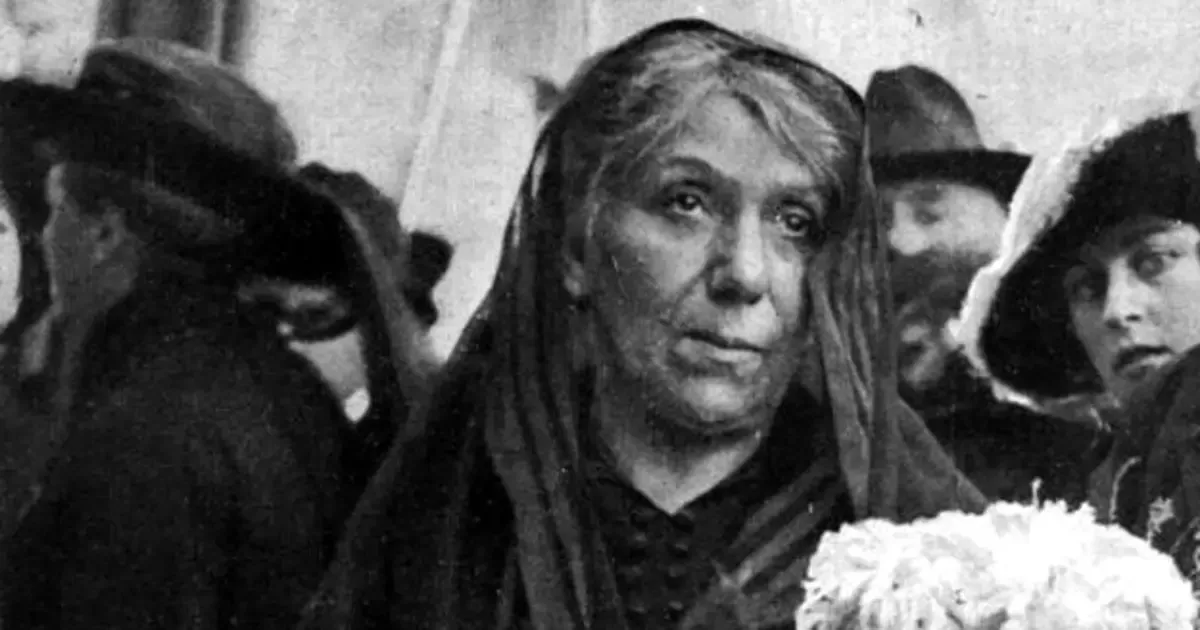
The history of Italy's Unknown Soldier is national in scale, but it turns on one woman's act. On 28 October 1921 Maria Bergamas stood before eleven unidentified coffins in Aquileia and selected the remains that would be carried to Rome. Her role gave a human form to the grief of families whose dead had never been identified.
A mother without a grave
Bergamas came from the border city of Gradisca d'Isonzo. Her son Antonio served with Italy and died during the First World War; his remains were not recovered. Her experience was therefore not symbolic in the abstract. She knew the specific absence that the unknown-soldier project sought to address.
Choosing a mother rather than an officer or politician shifted the ceremony's moral centre. The state organized the ritual, but bereavement supplied its authority. Bergamas did not identify a body as her son; she selected one anonymous serviceman to represent many sons.
Eleven coffins in Aquileia
Unidentified remains associated with different areas of the Italian front were assembled in eleven coffins and placed in the Basilica of Aquileia. On 28 October 1921, Bergamas moved before them and indicated the chosen coffin.
Popular retellings often linger on exactly how she collapsed, cried out or touched a particular casket. Such details vary in narration and can turn grief into legend. What matters historically is the public structure of the choice: every coffin was unknown, a mother of a missing soldier acted for the bereaved, and chance or emotion preserved the selected individual's anonymity.
The remaining ten coffins were interred at Aquileia. The basilica is therefore not merely the starting point of the Rome story; it is itself a major site of remembrance.
The funeral train
The selected coffin departed Aquileia on 29 October 1921 in a specially prepared railway carriage. The train moved through cities and smaller communities toward Rome. Archival images show stations, crowds, flowers and military honours, but the most striking feature was the participation of ordinary people along the route.
Railways had helped bind the physical territory of unified Italy. In 1921 the same network became a ceremonial line, allowing the unknown dead to pass through the country before reaching the capital. People who could not attend the burial could still witness the journey locally.
Arrival and burial
The coffin reached Rome for burial at the Vittoriano on 4 November 1921. The date marked the anniversary of the armistice that ended fighting for Italy in 1918 and later became associated with national unity and the armed forces.
At the Altar of the Fatherland, the anonymous soldier was placed within a monument originally created for Victor Emmanuel II. This juxtaposition changed public memory: the named king and unknown serviceman represented different forms of national history, one dynastic and one sacrificial.
What the images reveal
The surviving visual record is especially valuable because the ritual unfolded across multiple places. Photographs of the coffins at Aquileia, the railway carriage and the Rome ceremony show how architecture, transport, crowds and military protocol shaped mourning.
When viewing such images, distinguish documentation from later staging or captioning. A photograph captures a moment but does not by itself explain every identity or emotion. The best reading combines visual evidence with established dates and institutional history.
Bergamas after 1921
Maria Bergamas remained permanently associated with the Unknown Soldier. Her story has sometimes overshadowed her individuality by turning her simply into “the mother.” A more careful interpretation recognizes both roles: she was a specific person mourning Antonio and a public representative selected for a national ceremony.
Her connection also reminds visitors that the category “unknown” affects survivors. The absence of a name is not an empty abstraction; it leaves families without certainty, burial and ordinary rituals of farewell.
Aquileia's place in the national ritual
Aquileia was not chosen as a neutral hall. The basilica stood near territories profoundly marked by the Italian front and by changing borders. Bringing eleven coffins there concentrated different battle areas into one sacred setting before the national choice was made.
The ten soldiers not selected for Rome were buried at Aquileia. This prevents the event from being reduced to one “winning” coffin. All eleven represented unidentified dead; the ceremony assigned different commemorative destinations without restoring any personal name.
Why the railway mattered
The special train transformed a state decision into a participatory route. Departure on 29 October 1921 began several days of public encounter before entombment on 4 November. Stations offered structured points for tribute, while people along the line could witness the passage without travelling to Rome.
Rail had helped integrate the physical territory of the kingdom through mobility and communication. In this ritual it also integrated mourning. The coffin moved slowly enough for local communities to become witnesses, turning geographic distance into a sequence of collective farewells.
Reading the archival images carefully
Local assets showing coffins in the basilica, the train, its carriage and the Rome ceremony make the chronology visible. They should be read as documents with limits. A photograph records arrangement, crowd and material setting; it cannot by itself verify every caption, identify every person or reveal private emotion.
Compare images from different stages rather than using one picture as an illustration of the whole journey. The basilica emphasizes selection, the carriage emphasizes movement, station crowds emphasize participation, and the Vittoriano ceremony emphasizes state burial.
Bergamas as person and symbol
Public memory often calls her simply the mother of the Unknown Soldier. That title explains her ceremonial role but can erase her individual history and her son Antonio. She did not discover him among the coffins. She acted precisely because identification was impossible.
Keeping that distinction avoids a sentimental legend in which national symbolism resolves private loss. The ceremony gave Bergamas and other families a public focus, but it did not supply the certainty of a recovered relative. Its power rests in that unresolved absence.
The route's chronology should remain exact because small errors change the ritual's shape: selection on 28 October, train departure on 29 October and burial on 4 November 1921. This interval allowed the coffin to be encountered across Italy. Compressing the story into a single day removes the railway journey and the participation that made a state ceremony national in practice.
Following the story at the Vittoriano
At the exterior tomb, look beyond the scale of the architecture and imagine the preceding sequence: battle areas, eleven coffins, a basilica, a mother's choice, a slow train and crowds at stations. The tomb is the endpoint of that route, not the whole story.
The Central Museum of the Risorgimento extends its displays through the First World War, while the Shrine of the Flags and inner memorial have separate access information. Check official VIVE and Ministry of Defence pages for current arrangements.
The enduring power of the 1921 journey lies in its movement from one bereaved family toward a collective memorial. Bergamas made the selection, but communities along the railway completed the act by witnessing the unknown soldier's passage into national memory.
Om författaren

Rome Visitor Guide
Denna oberoende guide sammanställs utifrån information från VIVE, Italiens kulturministerium och museerna för att hjälpa besökare skilja kostnadsfritt tillträde från avgiftsbelagda upplevelser.
Tags
Comments (0)
Loading comments...