Victor Emmanuel II and His Monument in Rome
Meet the first king of unified Italy and learn how the Vittoriano's equestrian statue and architecture shaped his public memory.
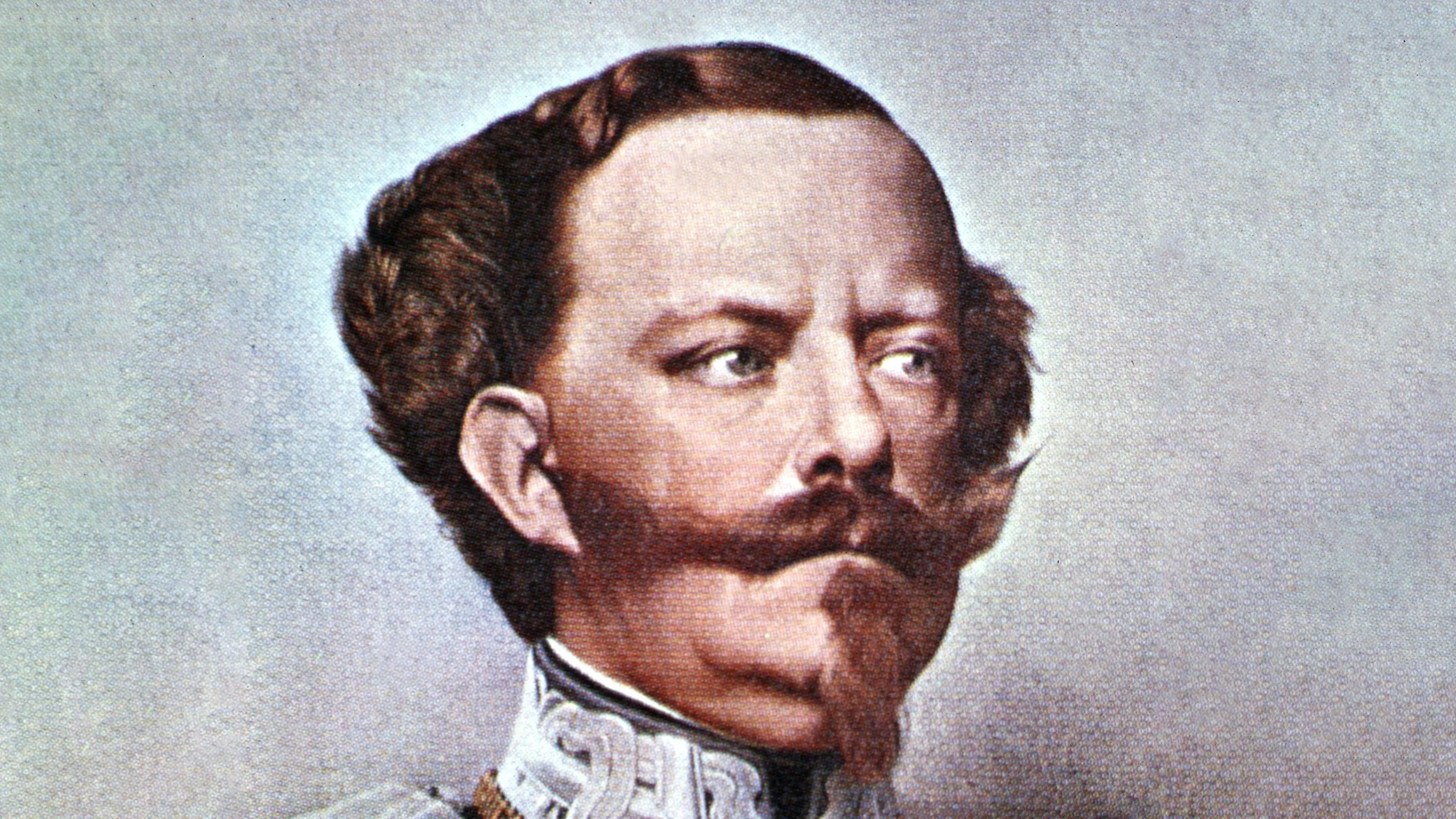
Victor Emmanuel II is present at the Vittoriano in name, scale and bronze. Yet many visitors pass his enormous equestrian statue without knowing why a nineteenth-century king occupies one of Rome's most prominent sites. His story explains the monument's original purpose and also the tensions later generations inherited from it.
From Piedmont-Sardinia to Italy
Victor Emmanuel became king of Sardinia in 1849 after his father, Charles Albert, abdicated during the wars against Austria. The kingdom, centred on Piedmont, became the political and military core around which unification advanced. Prime Minister Camillo Benso di Cavour supplied much of the diplomacy, Giuseppe Garibaldi led decisive volunteer campaigns, and popular and republican movements had pressed the national question for decades.
In 1861 parliament proclaimed the Kingdom of Italy and Victor Emmanuel II became its king. The regnal number remained “II” rather than restarting at “I,” a choice critics saw as evidence that Piedmont had expanded rather than a completely new state being founded. Unification was also incomplete: Venetia joined in 1866 and Rome in 1870.
Why Rome built a monument to him
When Victor Emmanuel died in 1878, he was buried in the Pantheon. The state rapidly conceived a separate national monument that would celebrate the first king and give the young capital a secular civic focus. The title “Father of the Fatherland” connected his person with the achievement of unity, though unification had involved many actors and sharply conflicting visions.
Placing the monument at the Capitoline linked the monarchy to Rome's ancient prestige. The site also made the building visible along new urban axes, turning memory into a permanent feature of daily movement through the capital.
The equestrian statue
At the centre stands Victor Emmanuel II on horseback, modelled by Enrico Chiaradia and completed after his death under Emilio Gallori. Giuseppe Maccagnani designed the base, whose fourteen allegorical figures represent historic Italian cities. The elevated ensemble makes the king the pivot between the Altar of the Fatherland below and the upper colonnade above.
The equestrian form belongs to a long tradition of rulers represented as commanding, mobile and calm. In Rome it inevitably invites comparison with the ancient bronze Marcus Aurelius associated with the nearby Capitoline. The Vittoriano adapts that prestigious language to a modern constitutional monarch and a newly unified state.
Around the base, allegorical figures representing major Italian cities broaden the subject beyond one individual. This is typical of the monument: the king remains central, but geography, civic identity and shared values continually expand the story.
Hero, symbol and historical problem
Nineteenth-century official memory often compressed unification into a small group of “fathers of the nation.” Modern history gives a more complicated picture. Victor Emmanuel worked within constitutional institutions but retained substantial royal power. Unification combined diplomacy, war, popular action and territorial annexation; it also produced opposition and unequal consequences across the peninsula.
Visitors do not need to choose between reverence and dismissal. The statue is evidence of how the liberal monarchy wanted unity remembered. The Central Museum of the Risorgimento nearby provides the documents and objects needed to place that official image beside Mazzini's republicanism, Garibaldi's volunteers and the wider social experience of the period.
From monarchy to republic
The Italian monarchy ended after the 1946 referendum. A monument named for a king now stood in a republic shaped by resistance to Fascism and a new constitution. The Vittoriano survived because its meaning had already exceeded Victor Emmanuel. The Tomb of the Unknown Soldier, installed in 1921, had become its emotional centre, while the national ceremonies held there could be reinterpreted within republican life.
VIVE's present account explicitly frames the complex through democratic and European values. This does not erase the royal origin; it makes the contrast visible. The same building carries the memory of monarchy, national sacrifice and constitutional republic.
Victor Emmanuel's path to the crown of Italy
Victor Emmanuel inherited the throne of Sardinia in 1849 after defeat at Novara brought his father's reign to an end. He retained the Statuto Albertino, the constitutional charter that later became the legal framework of the Kingdom of Italy. During the 1850s, Cavour's government used diplomacy, economic policy and alliance with France to weaken Austrian power in northern Italy.
Events then moved beyond court planning. Revolutions, plebiscites and Garibaldi's campaign in the south changed the map rapidly. Victor Emmanuel met Garibaldi at Teano in 1860, an encounter later turned into a powerful image of revolutionary conquest yielding to monarchical unity. In March 1861 the kingdom was proclaimed, but Venetia joined only in 1866 and Rome in 1870. The king's monument thus presents a long, contested process through one dynastic figure.
What the statue adds to his public image
Enrico Chiaradia designed the equestrian statue, and Emilio Gallori completed it after Chiaradia's death. The king sits above the visitor without a detailed narrative scene. Authority comes through scale, stillness and the established language of mounted rulers. Giuseppe Maccagnani's base broadens the message with fourteen allegorical female figures representing historic Italian cities.
Those city figures matter because they prevent the pedestal from functioning only as a royal biography. Urban identities encircle the monarch, suggesting that the nation is made from civic histories as well as a dynasty. They also belong to a wider geographic system that includes the two seas below and sixteen historical-region personifications above.
The limits of a “father of the nation” story
Royal commemoration condensed collective change into a clear hero. The museum inside the Vittoriano restores some of the complexity: republican activism, volunteer warfare, diplomacy, opposition and ordinary participation did not originate from one source. The retention of the number “II” after 1861 has often been read as a sign that the Savoy kingdom expanded rather than a wholly new state beginning on equal terms.
This does not make the statue historically useless. It makes it a primary source for official memory. Compare the controlled bronze image with letters, flags and personal objects in the Risorgimento Museum. The contrast shows how a state converts uncertain events into a stable public narrative.
The same comparison also separates Victor Emmanuel's historical role from the later cult of a single founder. Parliament, ministers, soldiers, volunteers, republicans, local voters and foreign powers all affected unification. The monument does not display those contributions equally. Its value is partly in making that imbalance visible: the king occupies the centre because the commissioning state chose monarchy as the organizing image of national history.
How to look at the king on site
First view the statue from Piazza Venezia, where it reads as part of the architecture. Then approach from one side and observe how high the pedestal places the figure above ordinary scale. Finally, look back from the upper terraces: the king no longer dominates alone, but sits within a larger field of regional statues, virtues, victories and the city itself.
That changing perspective is historically appropriate. Victor Emmanuel II was indispensable to the state that commissioned the Vittoriano, but the monument's later history has made him one element within a much wider and still debated national narrative.
Về tác giả

Rome Visitor Guide
Hướng dẫn độc lập này được tổng hợp từ thông tin của VIVE, Bộ Văn hóa Ý và các bảo tàng để giúp du khách phân biệt lối vào miễn phí với trải nghiệm có vé.
Tags
Comments (0)
Loading comments...